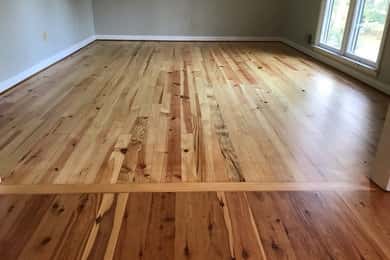
Hardwood Refinishing
Newly refinished hardwood can have different timelines for light traffic, furniture, cleaning and area rugs.
Return-to-service timing depends on the stain and finish system, product-specific cure schedule, temperature, humidity, ventilation and manufacturer guidance. Final Floors, LLC provides project-specific care guidance after hardwood floor refinishing rather than using one blanket timeline for every finish.
Read the answer and planning checks →Hardwood Refinishing
When the wood is structurally sound and has enough usable wear layer, professional refinishing may restore the floor without a full replacement.
The right decision depends on floor construction, prior sanding, board thickness, movement, staining, deep damage and repair needs. Final Floors evaluates the existing hardwood before recommending refinishing, targeted repair or replacement.
Read the answer and planning checks →Hardwood Refinishing
Odor, color tone, dry and cure behavior, sheen, maintenance and product-specific durability can vary between finish systems.
The right finish is not determined by one marketing claim. Household needs, desired appearance, ventilation, schedule and the specific finish manufacturer's guidance should be considered together. Final Floors reviews finish options for the actual hardwood and project conditions.
Read the answer and planning checks →Hardwood Refinishing
Wood species, age, sanding, natural undertones and room lighting can make the same stain look different from a printed chart or showroom sample.
On-site samples can help homeowners compare tone and sheen against cabinets, walls, trim and nearby rooms before committing to a final direction. Existing conditions can still affect the finished appearance, so a perfectly identical match should not be assumed in advance.
Read the answer and planning checks →Hardwood Refinishing
DuraSeal colors can read differently depending on wood species, sanding, natural undertones, lighting and the finish system applied over the stain.
For Metro Atlanta hardwood refinishing, on-floor stain samples are more useful than assuming one named color will look identical in every home. Final Floors can compare DuraSeal options as part of a project-specific refinishing plan.
Read the answer and planning checks →Hardwood Refinishing
Professional sanding systems can capture a large share of airborne sanding dust, but edges, corners, repairs, room conditions and normal job-site activity can still produce some residual dust.
The useful question is how dust is controlled, contained and cleaned during the specific refinishing process rather than whether a marketing phrase guarantees a perfectly dust-free environment.
Read the answer and planning checks →Hardwood Refinishing
A screen/recoat can refresh a compatible finish when the wear is primarily at the surface; deeper scratches, stain changes, bare wood, heavy discoloration or uneven finish may require sanding to bare wood.
The existing coating, contamination, damage depth and desired color change should be evaluated before choosing the lighter or more extensive process.
Read the answer and planning checks →Hardwood Refinishing
Urine and other staining can affect the finish, wood fibers, board joints and sometimes the substrate. The visible depth, remaining wear layer, odor and board condition determine whether sanding, board replacement or a combined approach is more realistic.
Final Floors evaluates the affected boards before promising a cosmetic result because aggressive sanding is not a safe substitute for understanding how deeply the damage extends.
Read the answer and planning checks →