What decision does this article help with?
Plan Atlanta flooring putback after qualified mitigation: readiness evidence, affected rooms, substrate assessment, preparation and transitions.
Loading your flooring page…
Helpful guides for your flooring decision
Plan flooring repair or replacement after source control and required mitigation, drying and remediation are complete.
Understand substrate condition, product requirements and the preparation included in your estimate.
More from Flooring Insights
Plan flooring repairs after mitigation, drying and needed remediation are completed by others.
Plan Atlanta flooring putback after qualified mitigation: readiness evidence, affected rooms, substrate assessment, preparation and transitions. Use the related Final Floors service, city and project links on this page if the topic matches a real Metro Atlanta flooring project. Call 770-910-9719 for a project-specific estimate.
Start Project Match · View Final Floors projects · Call 770-910-9719
Plan Atlanta flooring putback after qualified mitigation: readiness evidence, affected rooms, substrate assessment, preparation and transitions.
Visit Post-Mitigation Water-Damage Flooring for the related flooring service and project-planning details. This article provides general guidance; the written scope and estimate are specific to your property.
Use Project Match to send the project city, flooring type, approximate scope and known site conditions directly to Final Floors, LLC. A written estimate controls the actual scope, recommendation and price.
Start Project Match · View real Final Floors projects · Call 770-910-9719
Final Floors LLC · Metro Atlanta Flooring Education
Flooring education from Final Floors LLC
Know when flooring reconstruction can begin and what to document after qualified mitigation and drying are complete.
Published Oct 1, 2026
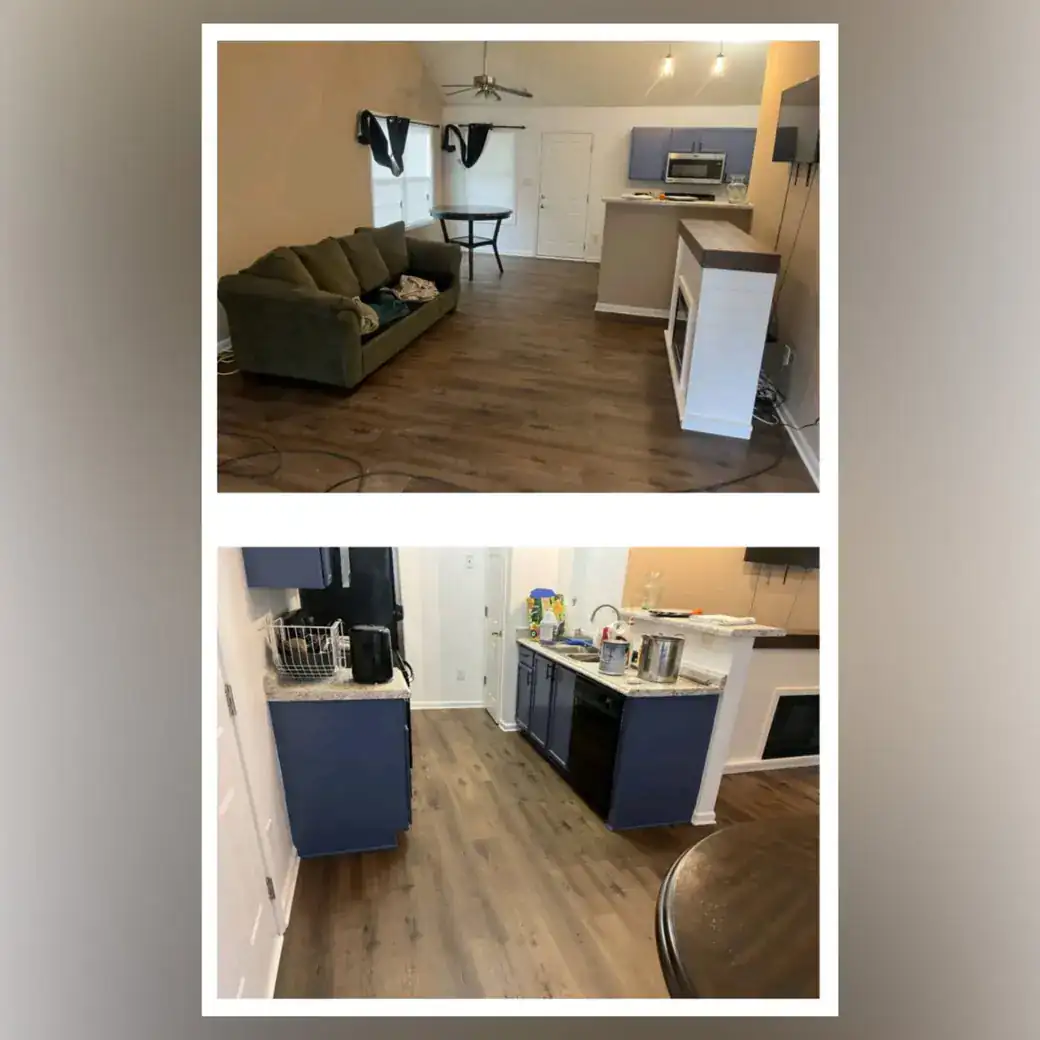
After a water loss, flooring work should begin only after the required mitigation, drying and remediation are complete. The flooring scope then depends on the affected material, substrate condition, moisture findings, floor preparation and the replacement or repair system selected for the property.
Flooring reconstruction follows stopping the water source and completing qualified mitigation, drying and any required remediation. Final Floors handles the flooring repair, replacement or putback stage. Emergency extraction and active remediation belong to the appropriate specialists.
The important question is whether the building assembly meets the selected flooring system's requirements. A dry-looking surface or a fixed number of elapsed days is not enough to establish readiness.
Ask the mitigation team what was removed, which areas were affected and what completion documentation is available. Ask the flooring contractor which materials and substrate areas need evaluation before a replacement recommendation.
An HVAC leak in a Buckhead condo, a plumbing loss in Johns Creek and a damaged crawlspace floor in Roswell can produce different work. Describe the actual event, material and affected rooms instead of treating all water losses as the same repair.
Localized board replacement may be appropriate for some wood floors. Refinishing depends on floor construction, remaining material, stability and damage. A resilient floor can require replacement or substrate work even if its top surface is marketed as waterproof.
Matching requires product identification and availability. Existing color, age, finish, board dimensions and transitions can limit the match. A written comparison of repair and replacement options helps establish an agreed scope.
Removing the affected floor can reveal damaged panels, residue, moisture concerns or flatness problems. The replacement system should not conceal an unresolved condition. Subfloor repair or preparation is separately defined when required.
Share available documentation with the flooring contractor, but do not assume one report covers every product requirement. Further assessment can be needed for the actual substrate and chosen material.
Keep photographs, mitigation records, product labels and room measurements where available. A flooring estimate should identify demolition still needed, disposal, substrate work, material, installation, trim, transitions and access.
For an insurance claim, Final Floors can provide flooring scope and project documentation for review. Coverage, reimbursement and matching decisions remain with the policy and insurer; a flooring estimate cannot guarantee claim approval.
• Confirm the source is stopped and the mitigation stage is complete.
• Identify all affected rooms and the materials being retained.
• Review moisture and substrate requirements.
• Compare repair, replacement and transition options.
• Agree on concealed-condition handling.
• Confirm product availability, access and scheduling.
In a managed property, involve the building manager early about elevators, loading areas and work hours. Keep responsibilities clear between the owner, mitigation team and flooring contractor.
Do not install over an unsuitable wet substrate. Resolve the source and necessary drying or remediation first, then verify requirements for the chosen system.
No universal coverage statement is reliable. The policy, insurer and documented loss determine the decision.
No. Stability, construction, remaining wear layer and damage must be evaluated before refinishing is recommended.
Read the matching service page, see Final Floors project evidence, and send the property city, approximate area, existing flooring, selected product and photos. Call 770-910-9719 or text 770-870-9876 for a free estimate. The written scope controls materials, preparation, price and scheduling.
Flooring work should begin only after the required mitigation, drying and remediation are complete. Installing over a substrate that has not been assessed or dried can trap moisture beneath the new floor. Confirm the affected materials, moisture findings and floor preparation before scheduling installation.
No. A waterproof plank is a flooring product characteristic, not protection for the structure. It does not stop leaks, flooding or moisture movement through a slab, and it does not make a room watertight. Address the water source and any required remediation before choosing the floor covering.
Collect the drying logs, moisture readings, affected areas and any removal records from the mitigation company, along with the insurer's scope if a claim is involved. These documents let the flooring scope be written against verified site conditions rather than assumptions.
The affected material, substrate condition, moisture findings, floor preparation needs, adjoining floors and trim or transition details all shape the scope. Matching limitations between existing and replacement material are also reviewed. The written estimate should list preparation and exclusions separately.
These sourced review excerpts are selected for relevance to water-damage flooring across Metro Atlanta when matching evidence exists. Original service labels and source platforms are preserved; company-level feedback is not relabeled as a local project.
Customer review records: 236+ review records across sources as of 2026-11-13. This is not a unique-customer count.
Explore Final Floors customer reviews · Google Business Profile · BBB profile · Yelp profile · Angi profile
Use this Metro Atlanta flooring guidance to understand the decision, then confirm the recommendation against the actual property and written scope. Tell us about your existing floor, the result you want and any known preparation needs so we can help you plan the next step.
Start with: what you have now · what you want next · the property city or ZIP · desired timing.
Compare commercial flooring, post-mitigation repairs, LVP/LVT and whole-home options. Review the relevant service, then tell us your city and project details for an estimate.
Final Floors project examples: Commercial project proof · Water-loss flooring project proof · LVP project proof · Whole-home flooring project proof
Call 770-910-9719 or text 770-870-9876 for a project-specific estimate.