What decision does this article help with?
After a Leak: Flooring Repair Boundaries and Matching. Plan flooring after mitigation, drying and required clearance.
Loading your flooring page…
Helpful guides for your flooring decision
Plan flooring repair or replacement after source control and required mitigation, drying and remediation are complete.
Understand substrate condition, product requirements and the preparation included in your estimate.
More from Flooring Insights
Plan flooring repairs after mitigation, drying and needed remediation are completed by others.
After a Leak: Flooring Repair Boundaries and Matching. Plan flooring after mitigation, drying and required clearance. Use the related Final Floors service, city and project links on this page if the topic matches a real Metro Atlanta flooring project. Call 770-910-9719 for a project-specific estimate.
Start Project Match · View Final Floors projects · Call 770-910-9719
After a Leak: Flooring Repair Boundaries and Matching. Plan flooring after mitigation, drying and required clearance.
Visit Post-Mitigation Water-Damage Flooring for the related flooring service and project-planning details. This article provides general guidance; the written scope and estimate are specific to your property.
Use Project Match to send the project city, flooring type, approximate scope and known site conditions directly to Final Floors, LLC. A written estimate controls the actual scope, recommendation and price.
Start Project Match · View real Final Floors projects · Call 770-910-9719
Final Floors LLC · Metro Atlanta Flooring Education
Flooring education from Final Floors LLC
Compare local repair, refinishing and replacement after a leak. Consider product matching, connected rooms, transitions and scope assumptions before choosing a practical flooring putback plan.
Published 2026-02-23 · Updated 2026-11-12
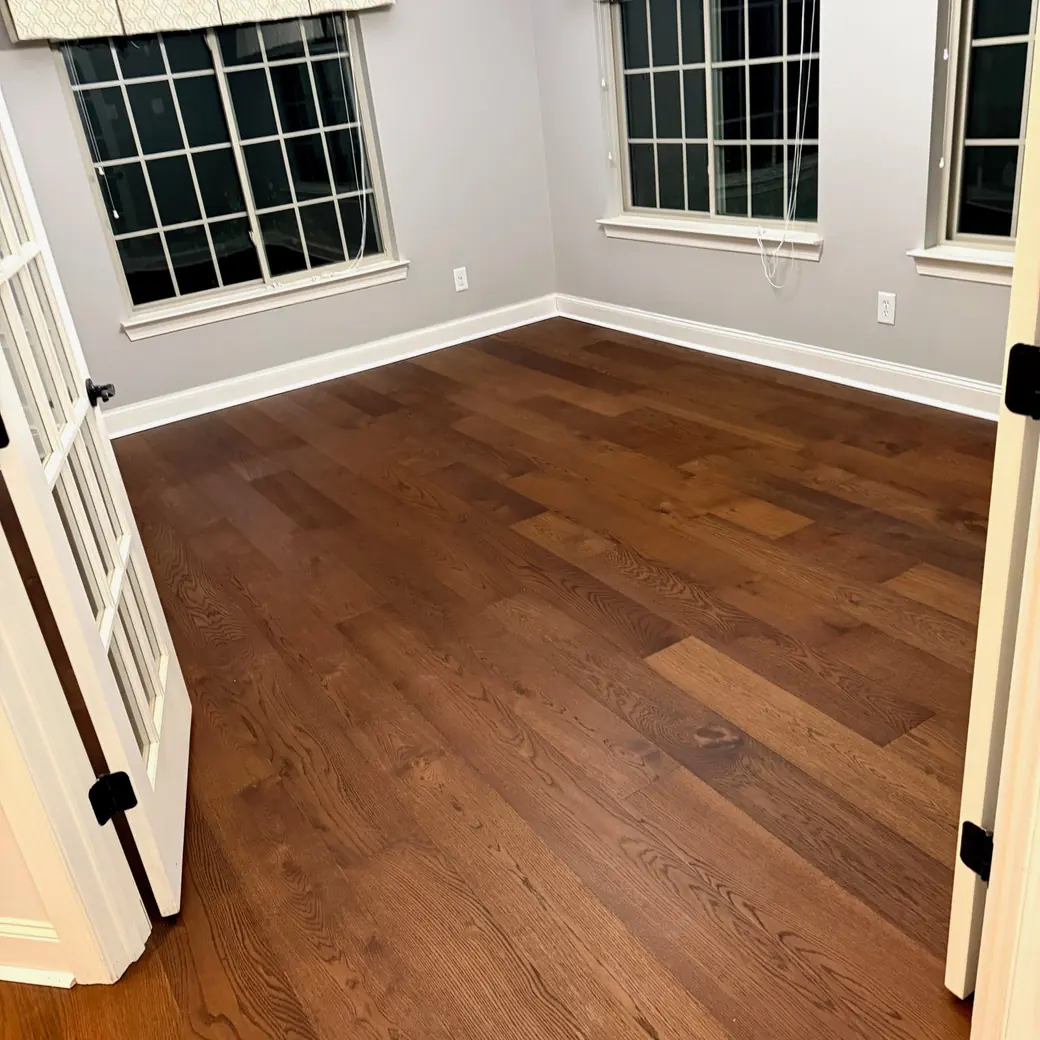
After a water loss, flooring work should begin only after the required mitigation, drying and remediation are complete. The flooring scope then depends on the affected material, substrate condition, moisture findings, floor preparation and the replacement or repair system selected for the property.
After a leak, the visible damaged area may not be the final boundary of a flooring repair. Matching material, connected rooms, installation details and the condition underneath can all affect what is practical.
For Metro Atlanta owners considering a flooring putback, compare the feasible repair options before assuming the entire home must be replaced or that a small patch will disappear. Flooring work begins after mitigation, drying and any required remediation by the appropriate providers.
Use a room plan or simple sketch to mark the affected areas and the floors you hope to retain. Include doorways, open connections, stairs and transitions to other materials.
Gather available product labels, invoices, spare material and safely retained samples. An exact product name is more useful than a general description such as “gray plank” or “oak floor.” Ask the responsible provider to handle any contaminated or unsafe materials.
The plan should also identify conditions that remain unknown until removal or assessment. A preliminary repair boundary may need to change as the full scope becomes clear.
A limited repair can preserve unaffected flooring, but it must be compatible with the existing installation. Ask about the proposed method, access to the damaged area and the condition of adjacent materials.
For LVP/LVT, color similarity alone does not establish compatible dimensions or connections. Product availability and the manufacturer's repair instructions matter. Reusing removed pieces should not be assumed.
For hardwood, replacement boards can differ from older flooring in grain, color and finish. Discuss likely appearance and whether a larger refinishing area is appropriate. No process can promise an invisible repair in every floor.
Hardwood refinishing depends on construction, remaining usable surface, prior sanding and current condition. Damage or staining may remain even when sanding is feasible.
A maintenance coat has different limits from a full refinish and is only suitable where the existing finish and surface condition allow it. It cannot repair damaged support or resolve an active moisture problem.
Ask how dust will be managed and which finish will be used. Obtain product-specific guidance for access, furniture and rugs before comparing refinishing with replacement on timing alone.
If a match is unavailable or the owner prefers a different surface, review a deliberate transition at a suitable location. Consider visual flow, finished heights, door clearances and product installation requirements.
LVP may be one option for an appropriate room, but it is not an insurer-endorsed or universally safer replacement. A waterproof product does not waterproof the room or prevent every effect of a future leak.
For tile, stone or other work outside the agreed flooring scope, identify an appropriate provider and coordinate the adjoining details. Final Floors' services focus on hardwood, LVP/LVT, carpet, stairs and related preparation.
Ask each option to identify removal, substrate preparation, repairs, finish materials, trim, transitions and moving responsibilities. Separate necessary work from elective design changes.
Keep assumptions visible. A material-only price does not account for all the work needed to connect a repair to the rest of the property. Current availability and written terms should replace historical promotions in the budget.
If a claim is involved, ask the insurer which work is covered and how matching or upgrade questions will be reviewed. Owner approval, insurer coverage and technical suitability are separate decisions.
Confirm the preceding repairs are complete and the substrate meets the selected system's requirements. Then agree on access, materials and the schedule.
Occupied homes may need a practical plan for furniture and essential routes. Businesses may need closures. Phasing can be discussed, but it should not be promised before the layout and product restrictions are understood.
At completion, keep product details, care instructions and the agreed records. Follow the exact return-to-use requirements instead of treating the installation's end date as permission for every activity.
Final Floors LLC has served Metro Atlanta since 2016 with flooring repairs, refinishing, installation and related preparation. To compare putback options after a leak, visit FinalFloors.com, call 770-910-9719 or text 770-870-9876. Include photos, affected rooms and any information about the existing product.
Flooring work should begin only after the required mitigation, drying and remediation are complete. Installing over a substrate that has not been assessed or dried can trap moisture beneath the new floor. Confirm the affected materials, moisture findings and floor preparation before scheduling installation.
No. A waterproof plank is a flooring product characteristic, not protection for the structure. It does not stop leaks, flooding or moisture movement through a slab, and it does not make a room watertight. Address the water source and any required remediation before choosing the floor covering.
Collect the drying logs, moisture readings, affected areas and any removal records from the mitigation company, along with the insurer's scope if a claim is involved. These documents let the flooring scope be written against verified site conditions rather than assumptions.
The affected material, substrate condition, moisture findings, floor preparation needs, adjoining floors and trim or transition details all shape the scope. Matching limitations between existing and replacement material are also reviewed. The written estimate should list preparation and exclusions separately.
Call 770-910-9719 or use the online estimator with the property city or ZIP, the rooms involved and the current floor covering. Final Floors LLC reviews the details and confirms next steps for that property.
These sourced review excerpts are selected for relevance to water-damage flooring across Metro Atlanta when matching evidence exists. Original service labels and source platforms are preserved; company-level feedback is not relabeled as a local project.
Customer review records: 236+ review records across sources as of 2026-11-13. This is not a unique-customer count.
Explore Final Floors customer reviews · Google Business Profile · BBB profile · Yelp profile · Angi profile
Use this Metro Atlanta flooring guidance to understand the decision, then confirm the recommendation against the actual property and written scope. Tell us about your existing floor, the result you want and any known preparation needs so we can help you plan the next step.
Start with: what you have now · what you want next · the property city or ZIP · desired timing.
Compare commercial flooring, post-mitigation repairs, LVP/LVT and whole-home options. Review the relevant service, then tell us your city and project details for an estimate.
Final Floors project examples: Commercial project proof · Water-loss flooring project proof · LVP project proof · Whole-home flooring project proof
Call 770-910-9719 or text 770-870-9876 for a project-specific estimate.