What decision does this article help with?
Hardwood, Tile and LVP: Atlanta Moisture Questions. Review product specifications, moisture, preparation and transitions.
Loading your flooring page…
Helpful guides for your flooring decision
Plan furniture pads and everyday care to protect your hardwood finish.
Understand the refinishing process, cost considerations and timing before your estimate.
More from Flooring Insights
Compare floor condition, project access and the selected finish's return-to-use instructions.
Separate moisture testing, substrate flatness and acoustic requirements in the written flooring scope.
Hardwood, Tile and LVP: Atlanta Moisture Questions. Review product specifications, moisture, preparation and transitions. Use the related Final Floors service, city and project links on this page if the topic matches a real Metro Atlanta flooring project. Call 770-910-9719 for a project-specific estimate.
Start Project Match · View Final Floors projects · Call 770-910-9719
Hardwood, Tile and LVP: Atlanta Moisture Questions. Review product specifications, moisture, preparation and transitions.
Visit Hardwood Flooring Installation for the related flooring service and project-planning details. This article provides general guidance; the written scope and estimate are specific to your property.
Use Project Match to send the project city, flooring type, approximate scope and known site conditions directly to Final Floors, LLC. A written estimate controls the actual scope, recommendation and price.
Start Project Match · View real Final Floors projects · Call 770-910-9719
Final Floors LLC · Metro Atlanta Flooring Education
Flooring education from Final Floors LLC
Separate sunlight, indoor conditions and substrate moisture when comparing flooring. Learn which product requirements and project details to review before choosing a surface for a particular room.
Published 2026-02-18 · Updated 2026-11-12
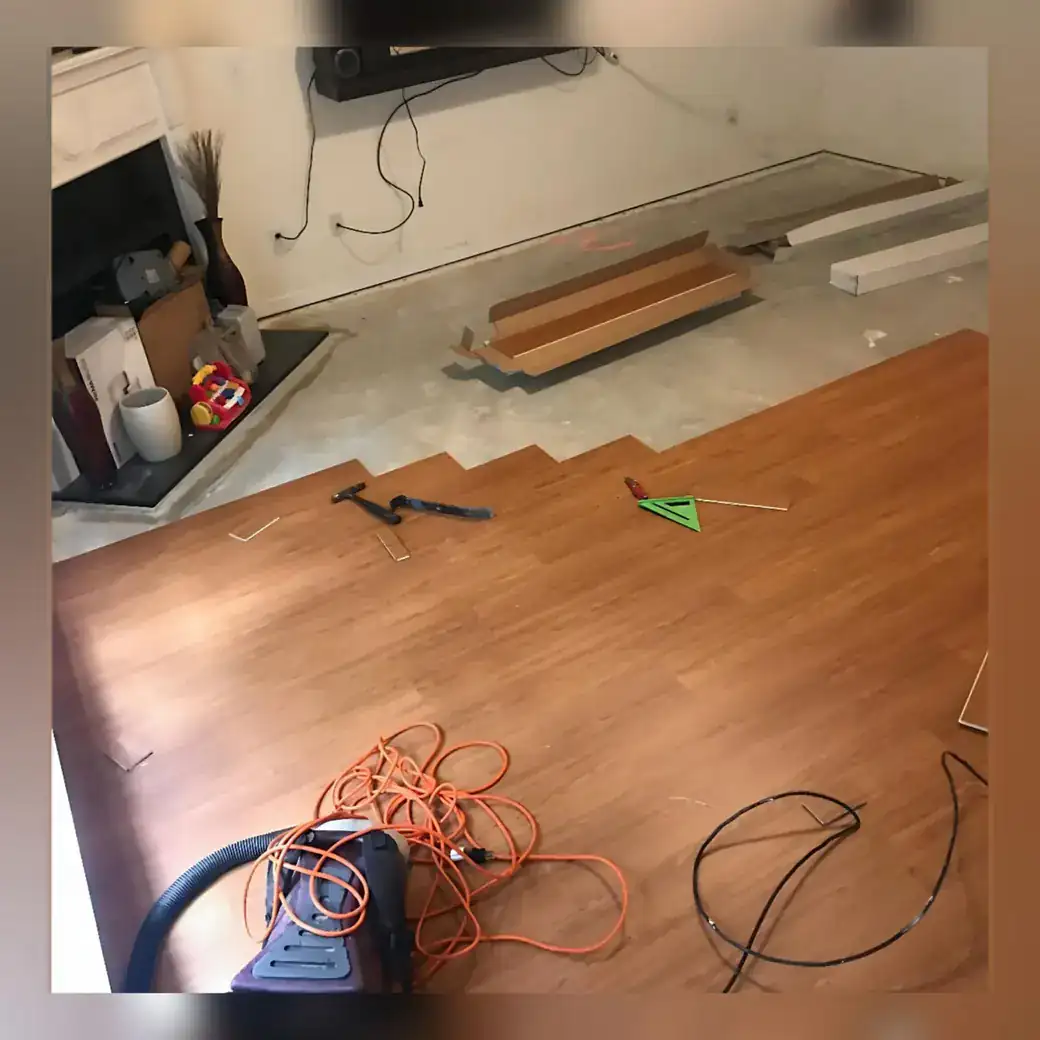
For LVP, choose the exact product and installation assembly before treating a waterproof claim as a complete solution. Check substrate flatness and moisture, permitted backing, transitions and expansion details. Material supply and installation are separate decisions; the written estimate should include preparation and the selected manufacturer's requirements.
Sunlight, indoor humidity and moisture in a substrate are different conditions. Each can affect a flooring decision, but they should not be reduced to one rule about which material is best for Metro Atlanta homes.
When comparing hardwood, tile and LVP, start with the actual room: its windows, normal indoor conditions, substrate, water history and daily use. Then check the exact products against those conditions.
Note where direct sun reaches the floor and whether the room becomes unusually hot or is not consistently conditioned. Tell the proposed installer about large windows, enclosed porches, lower-level rooms and any known moisture history.
Ask whether the product is intended for those conditions. The words “rigid core” or “waterproof” do not establish suitability for every sun-exposed or intermittently conditioned room.
Window treatments may be worth discussing as part of the room plan. Choose any films or other changes with appropriate advice for the windows and building, rather than assuming a floor covering alone can resolve heat or light exposure.
Wood flooring should be evaluated against the selected product's environmental and installation requirements. Engineered construction does not make every wood floor suitable for every slab, basement or moisture condition.
If retaining existing wood, consider its condition, previous work and the result you want. Refinishing may improve some wear or appearance concerns, but it cannot guarantee uniform color across aged and repaired boards. Not every wood product has enough usable surface for sanding.
Ask for the exact finish and care instructions. A universal humidity range or a general claim about low-VOC finishes cannot replace the requirements for that floor and finish system.
LVP may be an option where the exact product is appropriate for the room, substrate and use. Review temperature and light-exposure limitations, installation method and requirements around fixed objects and connected rooms.
A waterproof product does not waterproof the space or make a wet substrate acceptable. Backing and underlayment also need to be checked as a compatible system. More padding or an extra barrier is not automatically permitted or helpful.
Compare the actual surface performance and warranty terms. A single wear-layer number or core label does not establish immunity to scratches, dents, movement or fading.
Ceramic and porcelain can be part of a broader material comparison, but the tile surface is only one component of an installation. Substrate condition, movement, setting materials and any required waterproofing still matter.
Slip performance and suitability for a particular wet area need project-specific evaluation. A texture or single test value should not be treated as a guarantee of safety in all conditions.
Final Floors does not install ceramic or porcelain. If those materials are part of your plan, use an appropriate qualified provider and coordinate transitions with the adjoining flooring work.
For the proposed system, establish which assessment or tests are required and how the results will be interpreted. Keep the requirements for the flooring, adhesive, preparation materials and underlayment aligned.
Surface flatness and level are different issues, and moisture control does not repair damaged structural support. Ask what the preparation scope will actually correct and which conditions need another provider.
Active leaks and unresolved water losses should be addressed first. Final Floors handles flooring putback after mitigation, drying and required remediation by others. No flooring choice guarantees insurer approval or protection from a future leak.
Consider door clearances, stairs and adjoining surfaces before committing to one material across the home. Follow the exact installation requirements even where a continuous visual look is preferred.
For a managed building, obtain current acoustic and alteration requirements. Review the complete proposed assembly rather than relying on an individual accessory's rating.
Ask how each candidate should be cleaned and repaired. Keep suitable furniture protection and compatible mats in the plan, but follow the installed product's instructions for specific materials and methods.
A useful comparison includes removal, preparation, repairs, accessories and access, not just the finish material. Confirm the actual product availability and project-specific schedule before arranging movers or photography.
There is no reliable universal ranking of these materials for resale return, total cost or completion time. Choose the product and scope that fit the assessed room and your priorities.
Final Floors LLC has served Metro Atlanta since 2016 with hardwood, LVP/LVT and related flooring preparation. To discuss a room affected by sunlight or moisture concerns, visit FinalFloors.com, call 770-910-9719 or text 770-870-9876. Include photos, the room's use and any known water or indoor-condition history.
No. Waterproof describes the plank, not the assembly or the structure. LVP does not stop leaks or prevent moisture from moving through a slab, and it is not a substitute for mitigation or remediation. Resolve the water source before planning installation.
Compare the wear layer, core construction, thickness, the approved underlayment or backing, and the manufacturer's written installation requirements. Confirm the product is approved for the room and substrate involved. Check the exact specification rather than the marketing category.
Most LVP products specify flatness and substrate tolerances that must be met before installation, and exceeding them can affect the finished floor and the warranty. Preparation or leveling is planned first where needed. The product's own written requirements decide what is acceptable.
It typically covers removal of the old covering, substrate preparation, the selected underlayment or backing, expansion allowances, transitions and trim. Moisture and flatness checks belong in the scope too. Keep material supply and installation as separate decisions so each is clearly specified.
Call 770-910-9719 or use the online estimator with the property city or ZIP, the rooms involved and the current floor covering. Final Floors LLC reviews the details and confirms next steps for that property.
These sourced review excerpts are selected for relevance to LVP / vinyl plank across Metro Atlanta when matching evidence exists. Original service labels and source platforms are preserved; company-level feedback is not relabeled as a local project.
Customer review records: 236+ review records across sources as of 2026-11-13. This is not a unique-customer count.
Explore Final Floors customer reviews · Google Business Profile · BBB profile · Yelp profile · Angi profile
Use this Metro Atlanta flooring guidance to understand the decision, then confirm the recommendation against the actual property and written scope. Tell us about your existing floor, the result you want and any known preparation needs so we can help you plan the next step.
Start with: what you have now · what you want next · the property city or ZIP · desired timing.
Compare commercial flooring, post-mitigation repairs, LVP/LVT and whole-home options. Review the relevant service, then tell us your city and project details for an estimate.
Final Floors project examples: Commercial project proof · Water-loss flooring project proof · LVP project proof · Whole-home flooring project proof
Call 770-910-9719 or text 770-870-9876 for a project-specific estimate.