How to Vet a Hardwood Refinishing and Stair Renovation Contractor in Metro Atlanta
By Final Floors LLC · Published
See the written evidence a qualified hardwood refinishing and stair contractor should produce, plus a checklist to test any Metro Atlanta bid.
Request a free project-specific estimate · Send your city, approximate area and photos.
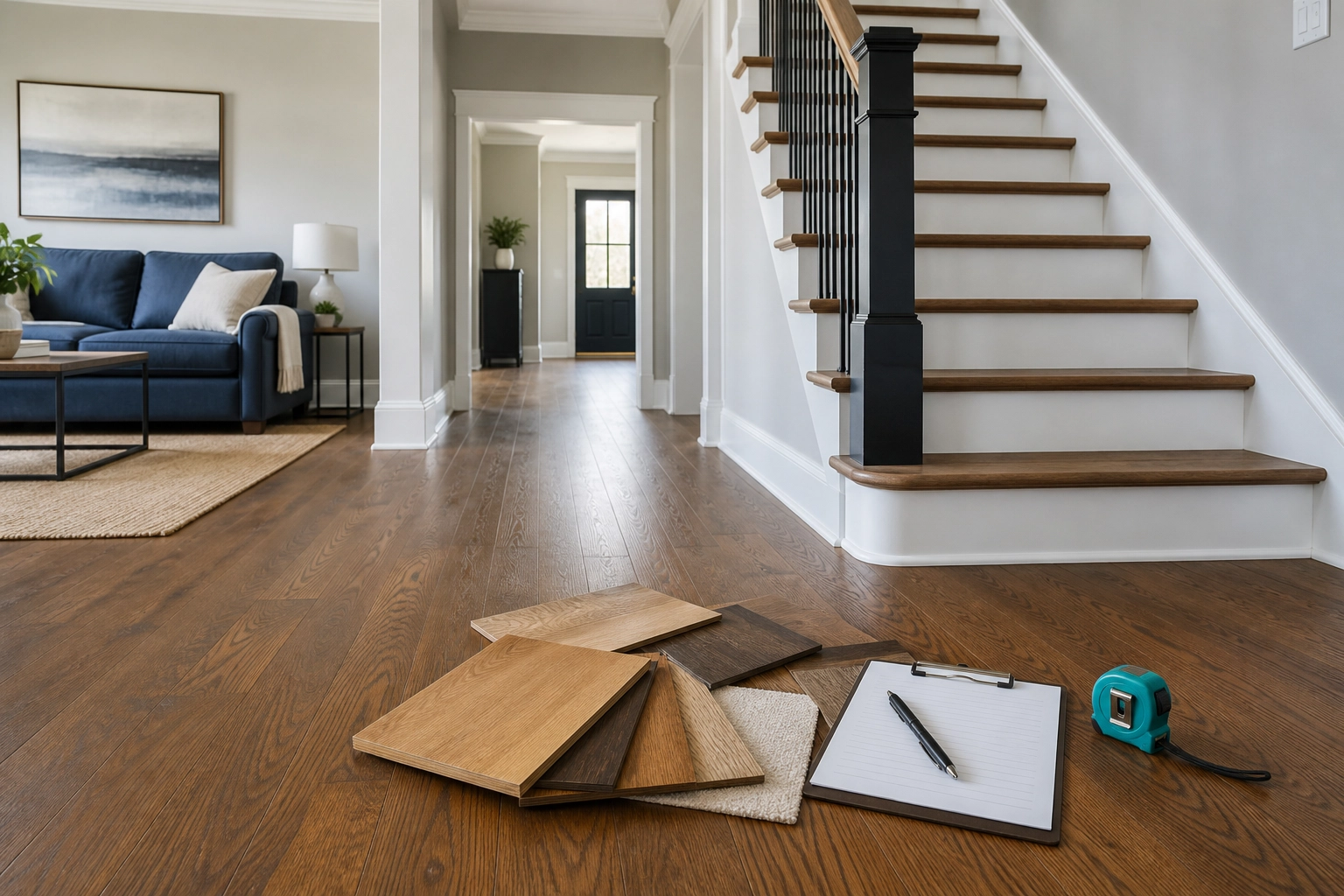
Choosing among hardwood floor refinishing contractors in Metro Atlanta is not a popularity contest. Longevity, a friendly first visit, or the lowest bid can hide gaps in measurement, scope, and documentation. The contractor worth hiring is the one who shows evidence: moisture readings, board-thickness checks, usable wood above the tongue, written stair details, a named finish system, a dust and protection plan, and a schedule you can plan around.
This guide gives you a buyer's vetting framework built on what a qualified contractor can actually produce, not on claims about who is best. You will learn why longevity and the lowest bid still pick the wrong company; how to verify license, entity, and permit path before bids; how to define scope first; and how to run six checkpoints on moisture, sanding depth, tread, riser, nosing, finish specs, dust control, and return to use. You will also get a checklist for comparing any Metro Atlanta bid across Atlanta, Roswell, Alpharetta, Sandy Springs, and Marietta, plus FAQs and a next step to turn the checklist into a written scope.

Why Longevity and the Lowest Bid Still Pick the Wrong Contractor
Years in business and a full truck say nothing about your floors. Neither tells you what a contractor will measure, document, or hand you in writing before a sander touches the wood.
A low number usually reflects an undefined scope, not a bargain: fewer finish coats, no moisture documentation, no stair detail, and no protection plan for the rooms you still live in. Ask what can change a hardwood floor refinishing scope, then compare bids on that answer.
Metro Atlanta homes range widely in age, subfloor type, and prior finish history. Subfloor type, prior finish history, and stair assemblies vary block to block. A useful qualification signal is whether the contractor asks about your assembly before quoting it.
So stop asking who is best. Start asking what a qualified hardwood floor refinishing contractor actually produces before, during, and after the job. Every section below is one question to ask and one document to request, so you can run any refinishing or stair renovation proposal against the same standard.
Before You Compare Bids: License, Entity, and Permit Path
Start with the actual scope, not a blanket price threshold. The Georgia State Licensing Board’s specialty-contractor policy lists Wood Flooring and Carpet, VCT & Base among traditional specialties. A contractor working within an exempt specialty does not have to hold a residential or general contractor license solely for that specialty work. This is not an exemption from applicable codes, local requirements or licensing required for other trades. Confirm the exact scope, any broader contracting work and permit responsibility with the state board and the local building department. Verify any license that is required or claimed; a license is not a workmanship guarantee.
Verify the entity next. The Georgia Secretary of State business search shows the registered name; match it exactly to the bid, contract, and certificate of insurance. A mismatch is a paperwork problem you do not want mid-project.
Ask who pulls the permit for stair renovation. Rules differ by city (Roswell, Alpharetta, Sandy Springs, Marietta among them), so confirm with the applicable building department.
Request a certificate of insurance and a written contract listing scope, exclusions, and payment schedule. Verbal coverage promises are not evidence.
Know Your Scope Before You Read a Single Bid
With license and entity questions settled, name the service you are buying. Full refinishing sands to bare wood and rebuilds the finish; screen-and-recoat cleans and adds a coat or two without removing the existing finish, and it costs far less. Solid versus engineered hardwood changes what can be sanded: wear layers limit surface removal, so that answer often decides refinish versus replace. Hardwood installation is a separate scope. Review what can change a refinishing scope before you assume otherwise.
If water damage is involved, mitigation comes first. Final Floors, LLC does not perform water extraction, drying, mold remediation or fire restoration. A qualified mitigation firm handles that, and flooring putback, including refinishing, is scheduled only after the structure is dry and cleared.
Stair work is its own line item: separate measurements, protection plan and schedule, even when one crew handles both. Condo and HOA projects add a step most bids skip: identify who signs off on scope, hours, and elevator or parking access before comparing numbers.
Checkpoint 1: What They Measured, Moisture and Board Thickness
A qualified contractor takes moisture readings of the wood, and of the subfloor where relevant, before sanding. The evidence is a written log with date, location in the home, and meter type, not a verbal "we checked it."
Practitioner guidance, not a universal tolerance: what matters is that readings are recorded and compared against the finish manufacturer's written requirement. The applicable number comes from that published specification. Ask which spec they follow.
Board thickness checks show how much material is left before a sanding pass; NWFA's factory-finished standard notes thickness depends on the board's original thickness, the amount sanded off, and the mil thickness of the finish. Cupping, prior refinishing cycles, and thin boards all reduce the safe removal available. Ask for the readings and thickness notes with the estimate; documentation you can keep separates a plan from a promise, and after water damage it feeds into water-damage flooring replacement planning.
A contractor unwilling to discuss moisture at all will explain a failed finish as your fault six months later.
Checkpoint 2: Usable Wood Above the Tongue and Sanding Depth
Sanding depth builds on board thickness. Usable wood above the tongue is the material sitting above the tongue-and-groove joint. Cut below it and boards can loosen, show visible lines, or fail outright. It is a measurement question, not a style question.
Acceptable remaining thickness and maximum removal vary by product and mill, so no single number covers every floor. A contractor can still state how they judge it and what happens if the floor is too thin. The NWFA notes that a wear thickness under 3/32 inch should not be sanded.
Ask whether the plan tests a single room first, so you see the result on your wood before committing the whole floor. A written test-area offer signals a bid grounded in inspection. If the floor cannot be sanded safely, shift the conversation to replace versus refinish before a deposit, not after sanding starts.
Get the sanding sequence in writing: rough sand, fine sand, screen or buff, stain if used, then finish coats, with pass and coat counts.
Checkpoint 3: Stair Details in Writing: Tread, Riser, Nosing
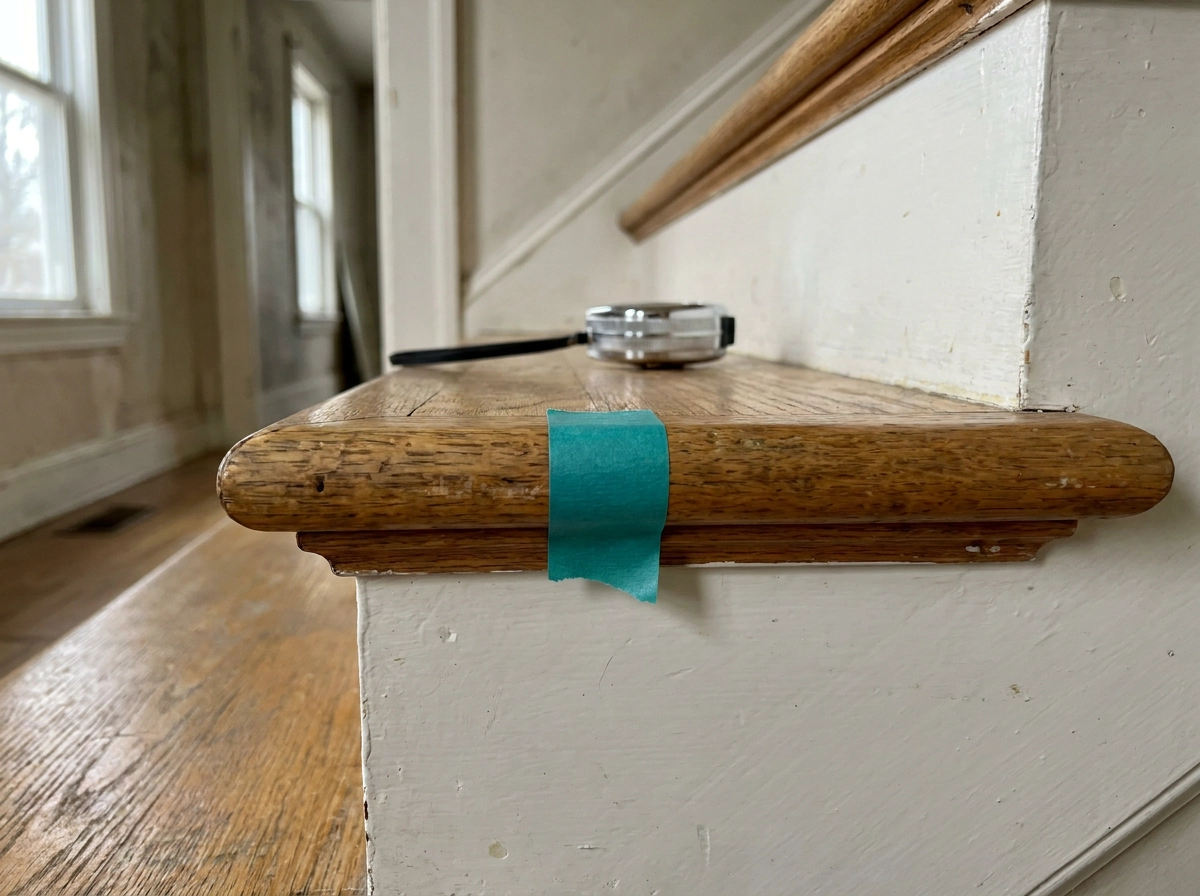
With sanding depth settled, stairs need their own written scope. It should name every element, treads, risers, nosing, stringers, balusters, and handrail, and state whether each is refinished, replaced, or left alone. A bid that says "stairs included" has told you nothing.
Tread depth, riser height, and nosing projection belong on paper, recorded per stair run. Older Atlanta-area stairs are frequently uneven, so a plan built on assumed dimensions surfaces as gaps and mismatched step heights. Ask how the nosing profile is handled, how the top and bottom landings transition, and whether a basement run is tied to the main level's finish. Then confirm refinish in place versus replacement with new treads and risers, and who owns code or permit items in each case. What can change a staircase flooring and renovation scope usually gets answered on site.
Expect more coat cycles, longer cure, and controlled access. A schedule that treats stairs as an afterthought strands your household mid project.
Checkpoint 4: The Finish System Spec, Not Just a Brand Name
Stair specs settled, the finish itself deserves the same scrutiny. A brand name is not a specification. Ask for the exact product line, sheen, coat count, and whether a sealer, stain, or hardener is part of the system. A qualified bid names the system and the specific product within it, then explains why that choice fits your wood species, existing color, and daily traffic.
Get cure and return-to-use times in writing, cited from the manufacturer's current published instructions rather than a general rule of thumb. Then clarify exclusions, where budget bids hide: stain color matching, additional coats, buffing between coats, and stair finishing top the list.
Finally, read the warranty language on the estimate. What is covered, for how long, and what voids it. Cleaning products, pets, standing moisture, and ignored cure windows are typical exclusions worth knowing up front.
Checkpoint 5: Dust Control and Site Protection Plan
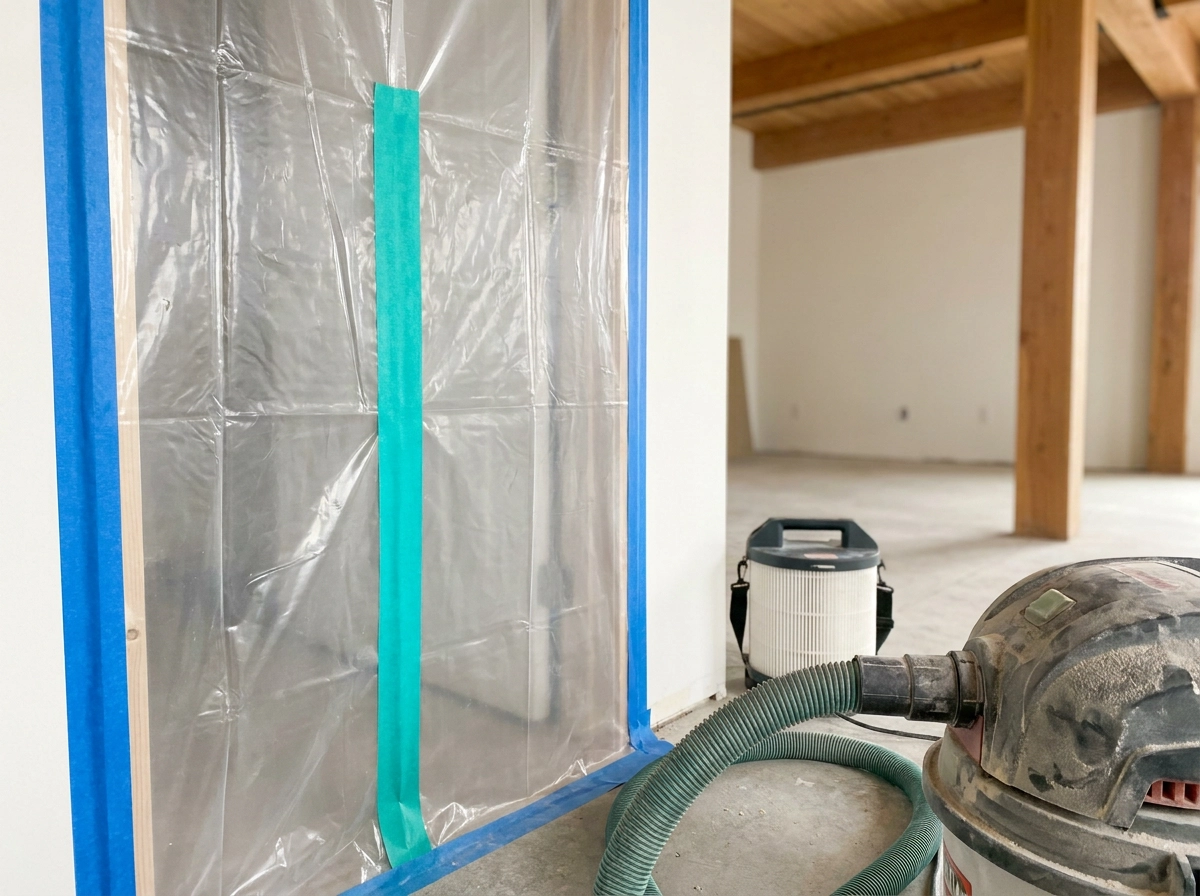
A finish spec protects the wood. The next checkpoint protects everything else in the building. Ask how dust is contained: plastic barriers at doorways and stairwells, sealed HVAC returns, and whether sanding equipment is connected to HEPA filtration. Listen for equipment and barriers, not reassurance. The written protection plan should name floors not being refinished, cabinets, counters, baseboards, door casings, appliances, and adjacent carpet. Written lists beat verbal promises later. Pin down baseboards and shoe molding: who removes and reinstalls them, and whether wall touch up after reinstallation is included or excluded. This is a common mid project dispute. Confirm daily cleanup and how the crew leaves each evening, plus parking, elevator, and staging rules in condos, offices, retail spaces, and churches. In occupied condos, rental turnovers, restaurants, and places of worship, the dust and access plan often decides between two equal bids.
Checkpoint 6: The Schedule and the Return to Use Window
Ask for a written timeline naming site prep and protection, sanding days, stain, each coat day, dry time between coats, and final cure. The Dunwoody refinishing scope walk-through shows how a timeline plays out.
Ask how many rooms or square feet the crew finishes per day, and whether stair work runs parallel to floor work or afterward. Parallel work can block your stairs; sequential work stretches access.
Get return to use terms in writing: furniture, rugs, pets, foot traffic. Ask how Atlanta spring and summer humidity, weather, and HVAC operation affect drying, and how they adjust instead of compressing the sequence.
Finally, ask what triggers a written change order and how it is priced and approved before work continues. Contractors who document changes rarely surprise you at the final invoice.
Run Any Metro Atlanta Bid Against This Checklist
Fold all six checkpoints into a single scoring sheet you run against every bid.
Score each bid on six evidence points: moisture and board thickness documentation; usable wood above the tongue and sanding depth; stair tread and riser detail; finish system specification; dust and protection plan; and a schedule with coat days and cure times.
Red flags: no written scope, a brand only finish description, "we'll figure out the stairs on site," no containment plan, no cure or return to use times, a price that only works if coats get cut.
Good answers are specific and unexciting: readings with dates and locations, named products and coat counts, tread and riser notes per run, barrier and filtration details, a day by day plan.
Use the identical checklist for every hardwood floor refinishing contractor you interview, so you compare evidence, not sales polish. Keep it to one screenshot ready page and bring it to each walkthrough, so your questions open the conversation before their presentation.
Frequently Asked Questions
Does Georgia license hardwood refinishing contractors? Requirements depend on the work being contracted. The state board lists Wood Flooring as a traditional specialty that can be exempt from residential/general contractor licensing when the contractor stays within that specialty. Broader work, other licensed trades and local permits may have separate requirements. Confirm the proposed scope with the board and your local building department rather than using a price threshold alone.
How do I verify a contractor's legal entity? Pull the registered entity name from the Georgia Secretary of State business search and match it to the bid, contract, and certificate of insurance. Resolve mismatches before signing.
What should a stair renovation estimate include? Each element by name: treads, risers, nosing, stringers, balusters, handrail. State whether each is refinished or replaced, per run dimensions, permit responsibility, and cure-day access.
Refinish or screen-and-recoat? A compatible worn finish over sound wood may suit a screen-and-recoat. Staining, cupping or limited remaining wood requires assessment; repair or replacement may be more appropriate than sanding. NWFA guidance cautions against sanding when the remaining wear layer is too thin. Floor condition, usable wood and finish compatibility determine the scope.
Who handles water damage mitigation? Mitigation is a separate specialty handled before putback, see the scope section above for Final Floors' limits.
Next Step: Turn the Checklist Into a Written Scope
Build your shortlist against the six checkpoints, then request each contractor's measurements, finish specification, stair detail sheet, and schedule before you sign. A bid with documents you can compare beats a verbal estimate.
Final Floors, LLC serves Atlanta, Buckhead, Midtown, Roswell, Alpharetta, Johns Creek, Sandy Springs, Marietta, East Cobb, Smyrna, Vinings, Duluth, and Peachtree Corners. We handle hardwood refinishing, screen-and-recoat, subfloor repair and leveling, staircase repair and renovation, and flooring putback after qualified mitigation.
To start, send your city, area or square footage, existing floor type, and a few photos. Call 770-910-9719, text 770-870-9876, or request a free estimate. You can also share details through our project match page.
Conclusion
Confirm license, entity, and permit path; verify measured board thickness, usable wood above the tongue, and sanding depth; and require stair details plus a written finish spec. Add dust control, site protection, and a realistic return-to-use schedule. A written scope you can compare beats a verbal estimate.
Final Floors, LLC is your Roswell-based Metro Atlanta partner for this work, call 770-910-9719 or text 770-870-9876 to get started.