What decision does this article help with?
Replacing Carpet With LVP: An Atlanta Checklist. Review room use, cushion, seams, removal and floor preparation.
Loading your flooring page…
Helpful guides for your flooring decision
Compare wear layers before choosing flooring for your rooms and daily traffic.
More from Flooring Insights
Compare the exact LVP product, substrate repairs, transitions and tenant-turn work sequence.
Replacing Carpet With LVP: An Atlanta Checklist. Review room use, cushion, seams, removal and floor preparation. Use the related Final Floors service, city and project links on this page if the topic matches a real Metro Atlanta flooring project. Call 770-910-9719 for a project-specific estimate.
Start Project Match · View Final Floors projects · Call 770-910-9719
Replacing Carpet With LVP: An Atlanta Checklist. Review room use, cushion, seams, removal and floor preparation.
Visit Carpet Installation for the related flooring service and project-planning details. This article provides general guidance; the written scope and estimate are specific to your property.
Use Project Match to send the project city, flooring type, approximate scope and known site conditions directly to Final Floors, LLC. A written estimate controls the actual scope, recommendation and price.
Start Project Match · View real Final Floors projects · Call 770-910-9719
Final Floors LLC · Metro Atlanta Flooring Education
Flooring education from Final Floors LLC
For homeowners, realtors, and property managers across Roswell, Alpharetta, Marietta, Sandy Springs, and the greater North Metro Atlanta area, this article outlines the critical steps to verify before converting carpeted spaces to luxury vinyl plank. It details how documented moisture readings, subfloor repairs and flatness, finished-height planning, and manufacturer-matched trims protect warranties, budgets, and schedules. Atlanta-specific issues are addressed, including seasonal humidity, mixed substrates between slab and crawlspace additions, basement vapor control, and tight appliance clearances. Reference timelines and pricing ranges are provided, alongside guidance on when dust-free hardwood refinishing may be the superior option in main living areas. With in-house flooring crews, moisture testing, and warranty-ready preparation, Final Floors, LLC offers A+ BBB-accredited service, mobile showroom samples, and fast scheduling. Schedule a free on-site estimate and moisture/subfloor inspection to secure an accurate, line-item scope and avoid costly surprises.
Published 2026-03-08 · Updated 2026-09-23
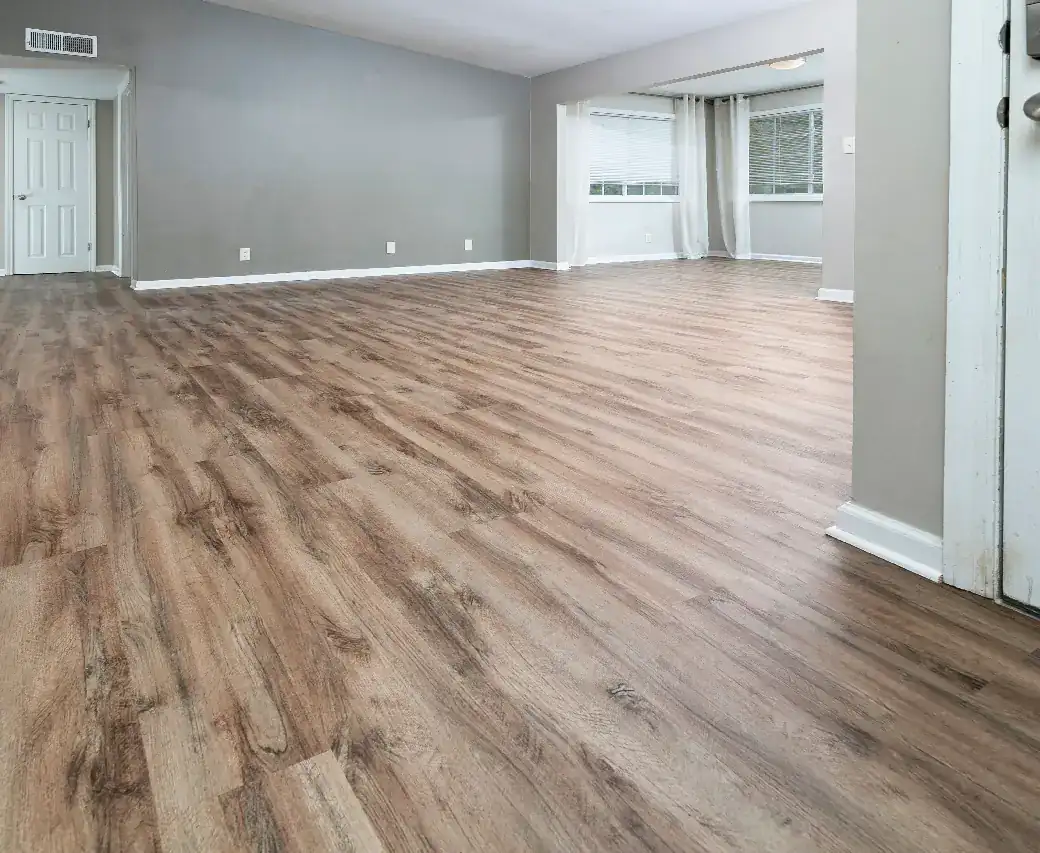
New flooring can only perform as well as the surface supporting it. Before installation, evaluate flatness, movement, damaged sections, moisture conditions and product-specific substrate requirements; targeted repair is often better than covering an unresolved problem.
Subfloor Repair & Floor Leveling: scope and estimate guidance
[](https://finalfloors.com/metro-atlanta-before-and-after-flooring-transformations/before-after-flooring-transformations-atlanta-final-floors "https://finalfloors.com/metro-atlanta-before-and-after-flooring-transformations/before-after-flooring-transformations-atlanta-final-floors")
Across Roswell, Alpharetta, Marietta, Sandy Springs, and the greater North Metro Atlanta area, many homeowners, realtors, and property managers choose luxury vinyl plank (LVP) for its waterproof, low‑maintenance appeal. It is a smart, durable upgrade—especially for busy households, rentals, and moisture‑prone spaces. However, unexpected site conditions can double your budget or delay your move‑in if you skip planning. The following guide outlines the most common surprises we encounter locally and how to avoid them with a proper inspection, sequencing, and the right installation team.
• Hidden moisture and slow leaks
• Where it appears: exterior doors, kitchens, laundry rooms, bathrooms, basements, and below windows/thresholds.
• Why it matters: Moisture trapped under carpet pads can wick into plywood or concrete. Installing LVP over damp subfloors risks adhesive failure, cupping, hollow spots, or mold—and can void warranties.
• Solution: Documented moisture readings (wood moisture content and concrete RH/CM), door threshold and flashing checks, and leak repairs before any plank is installed.
• Subfloor damage and flatness
• What we find: soft spots, delaminated plywood, high/low spots in slabs, old patch compounds, and failing particle board underlayers around older vanities and appliances.
• Why it matters: LVP systems require flat, sound substrates. Irregularities telegraph through the floor and compromise locking systems.
• Solution: Replace damaged panels, mechanically prep or grind high spots, skim low areas with compatible patch, and install moisture barriers/sound underlayments per manufacturer guidelines to preserve warranties.
• Finished‑height changes
• What happens: Replacing cushioned carpet with thinner LVP can drop your finished height by 3/8"–3/4".
• Risks: Misaligned toilet flanges (leaks and wobble), refrigerator or dishwasher pinch points, door undercuts that look rough, gapped baseboards/shoe, exposed floor outlets, and trip hazards at transitions.
• Solution: Plan for flange resets or extension rings, appliance clearance checks, proper reducers/thresholds, baseboard or quarter‑round adjustments, and correct trim at outlets/vents.
• Trim and transitions
• What is missed: reducers at tile or hardwood, end caps at sliders, stair noses, and waterproof quarter round in wet rooms.
• Why it matters: Skipping trims causes gaps, chipping, noisy movement, and water intrusion at the edges.
• Solution: Order the correct manufacturer‑matched trims with your plank selection—before demo—to keep schedules tight and finishes uniform.
• Comfort and acoustics
• Reality check: LVP is cooler and can sound “clicky” over concrete slabs or vented crawlspaces compared with carpet.
• Solution: Specify the right underlayment (sound/thermal rated and approved by the LVP brand), use area rugs with quality pads, and consider keeping or refreshing carpet in bedrooms and playrooms for warmth and sound control.
• Rushed hiring and subcontractor mix‑ups
• What can go wrong: Inexperienced demo crews can gouge walls, dent doors, or break baseboards and nosings. Communication gaps also lead to missed moisture tests and insufficient subfloor prep.
• Solution: Use licensed, in‑house crews with documented moisture/subfloor inspections, clean demolition practices, and warranty‑protecting prep included in writing.
• Pre‑project inspection
• Take moisture readings at exterior doors, kitchens, baths, basements, and around appliances.
• Identify subfloor type: plywood over joists, concrete slab, or mixed conditions (common in Roswell and Alpharetta additions).
• Check door thresholds, weatherstripping, and flashing details.
• Note toilets, drop‑in/outlet boxes, HVAC vents, stair edges, and adjacent flooring heights (tile, hardwood, laminate).
• Photograph existing conditions for insurance or warranty records.
• Scope and budgeting
• Add a 10–20% contingency to cover hidden damage, leveling, and trim adjustments.
• Line‑item allowances for:
• Subfloor repairs/leveling and moisture mitigation
• Toilet flange resets and new wax/rings
• Baseboard/quarter‑round updates and paint touch‑ups
• Door undercuts/threshold repairs
• Appliance and dishwasher clearance checks
• Transition moldings and stair nosings
• Materials and underlayment
• Choose an LVP thickness and wear layer that matches use: 20 MIL wear for active homes, rentals, and commercial hallways; thicker cores improve stability.
• Wood subfloors vs. slabs need different approaches:
• Wood: vapor retarder or approved acoustic pad, fastener checks, and panel replacement where delaminated.
• Concrete: moisture testing, vapor barrier or mitigation if high RH, and compatible sound/thermal underlayment.
• Order matching reducers, T‑molds, end caps, stair noses, and waterproof quarter round for wet areas. Confirm color continuity across trim SKUs.
• Sequencing and dry time
• Demolition and haul‑away, then dehumidification to acceptable moisture levels.
• Acclimate per manufacturer guidelines; protect cartons from garage humidity swings.
• Coordinate plumber/electrician as needed for flange resets, floor outlets, and built‑in appliances.
• Install, then allow any adhesive/caulk to cure before heavy furniture moves or water exposure.
• Comfort strategy
• Prioritize LVP in moisture‑prone rooms: kitchens, entries, basements, laundry, and powder rooms.
• Keep or refresh carpet in bedrooms, dens, and media rooms for warmth and acoustics; choose hypoallergenic padding where appropriate.
• Supplement with area rugs and premium rug pads to soften footfall over slabs.
• Choosing the right pro
• Look for:
• Licensed, in‑house crews (not day‑rate subs)
• Written moisture and subfloor inspections
• Warranty‑preserving prep included in scope
• Clear communication, a final walkthrough, and care guidance
• Ask to see local project photos from Marietta bungalows, Sandy Springs townhomes, or Alpharetta basements to confirm experience across home types.
• Humidity and storm events: Summer humidity and storm‑related intrusions around thresholds and decks are common in North Metro neighborhoods. Plan for robust moisture testing and, when needed, door pan/threshold repairs before LVP.
• Mixed substrates in renovations: Many Roswell and Marietta homes have additions with slab‑on‑grade connected to crawlspace areas. Expect elevation and flatness differences that require professional leveling and transition planning.
• Appliance clearances: Popular counter‑depth fridges and tight dishwasher openings in Brookhaven and Buckhead kitchens demand precise height planning. A drop in floor height can jam slides or require leg adjustments.
• Basements: Alpharetta and Suwanee basements benefit from rigid‑core LVP with proper vapor mitigation. Verify that dehumidifiers can maintain stable RH year‑round.
Under many carpets in Decatur, Smyrna, and East Cobb homes, original hardwood hides in excellent condition. Before committing to LVP throughout, lift a corner (or ask your estimator to) and evaluate:
• Solid or engineered hardwood thickness
• Pet stains or water damage
• Squeaks, fastener issues, and gaps
If the hardwood is viable, dust‑free refinishing with low‑VOC finishes can be a value‑boosting alternative—especially in living rooms and dining rooms—while LVP still serves kitchens, basements, and mudrooms. Blended projects are common in Johns Creek and Milton: refinish existing hardwood in the main areas and install LVP in moisture‑prone zones for the best of both worlds.
• Typical duration: Many LVP projects complete in a project-specific timeframe once prep is done. Add time for moisture drying, leveling, and trim paint.
• Budget control tips:
• Decide on trims and transitions up front; back‑orders slow projects.
• Approve leveling caps and baseboard plans before demo.
• Keep a 10–20% contingency to avoid mid‑project stress.
• Reference pricing:
• LVP materials from approximately $1.79/sq ft
• LVP material + installation from approximately $4.49/sq ft
• Specials and holiday pricing may apply based on inventory
Actual costs depend on subfloor conditions, trims, stairs, and moisture mitigation. A thorough onsite inspection is the most reliable way to lock in a firm scope.
• a flooring project team——so craftsmanship is consistent and communication is clear.
• 20+ years in business, local flooring project experience, A+ BBB accreditation, and a 4.9‑star Google rating (125–verified customer reviews).
• Warranty‑ready installations with documented moisture readings, proper subfloor prep, and manufacturer‑approved underlayments.
• Free in‑home estimates with mobile showroom samples and fast scheduling.
• project timing depends on scope and site conditions after prep.
• Full scope capabilities:
• Flooring sales and installation: LVP, hardwood, laminate, carpet, tile, and natural stone
• Dust‑free hardwood refinishing with Bona, DuraSeal, Rubio Monocoat, and Minwax
• Subfloor leveling, moisture barriers, and sound underlayment
• Staircase upgrades, transitions, and trim carpentry
• Water‑damage flooring restoration and insurance putback (preferred relationships with ServPro and ServiceMaster)
• Commercial after‑hours and phased installations for offices, medical admin spaces, retail, and professional buildings
Featured LVP option: 7.56" x 48.62" planks, 5MM total thickness + 1MM XPS backing, 20 MIL wear layer, cut bevel—sold by the pallet (approx. 1,123 sq ft)—ideal for post‑water‑damage rebuilds and high‑traffic updates.
Service areas include Roswell, Alpharetta, Marietta, Sandy Springs, Johns Creek, Brookhaven, Buckhead, Smyrna, Vinings, Duluth, Suwanee, Kennesaw, Woodstock, Peachtree Corners, Decatur, Dunwoody, Milton, Cumming, East Cobb, Lawrenceville, Norcross, Midtown Atlanta, and surrounding North Metro Atlanta communities.
• Schedule a free estimate and onsite moisture/subfloor inspection.
• Review a detailed, line‑item scope with built‑in contingency.
• Select your LVP, underlayment, and matching trims with in‑home samples.
• Approve sequencing and any required plumber/electrician coordination.
• Walk through your project on completion and receive care/maintenance guidance.
Contact Final Floors, LLC
• Call: 770-910-9719
• Text: 770-870-9876
• Email: [email protected]
• Website: https://finalfloors.com/
Takeaway: In Metro Atlanta, a thorough inspection and scope—plus the right underlayment, transitions, and in-house flooring crews—prevent costly surprises and keep your new LVP floors comfortable, safe, and warranty‑ready. We Make Floors Look Good.
No. Waterproof describes the plank, not the assembly or the structure. LVP does not stop leaks or prevent moisture from moving through a slab, and it is not a substitute for mitigation or remediation. Resolve the water source before planning installation.
Compare the wear layer, core construction, thickness, the approved underlayment or backing, and the manufacturer's written installation requirements. Confirm the product is approved for the room and substrate involved. Check the exact specification rather than the marketing category.
Most LVP products specify flatness and substrate tolerances that must be met before installation, and exceeding them can affect the finished floor and the warranty. Preparation or leveling is planned first where needed. The product's own written requirements decide what is acceptable.
It typically covers removal of the old covering, substrate preparation, the selected underlayment or backing, expansion allowances, transitions and trim. Moisture and flatness checks belong in the scope too. Keep material supply and installation as separate decisions so each is clearly specified.
Call 770-910-9719 or use the online estimator with the property city or ZIP, the rooms involved and the current floor covering. Final Floors LLC reviews the details and confirms next steps for that property.
These sourced review excerpts are selected for relevance to LVP / vinyl plank across Metro Atlanta when matching evidence exists. Original service labels and source platforms are preserved; company-level feedback is not relabeled as a local project.
Customer review records: 236+ review records across sources as of 2026-11-13. This is not a unique-customer count.
Explore Final Floors customer reviews · Google Business Profile · BBB profile · Yelp profile · Angi profile
Use this Metro Atlanta flooring guidance to understand the decision, then confirm the recommendation against the actual property and written scope. Tell us about your existing floor, the result you want and any known preparation needs so we can help you plan the next step.
Start with: what you have now · what you want next · the property city or ZIP · desired timing.
Compare commercial flooring, post-mitigation repairs, LVP/LVT and whole-home options. Review the relevant service, then tell us your city and project details for an estimate.
Final Floors project examples: Commercial project proof · Water-loss flooring project proof · LVP project proof · Whole-home flooring project proof
Call 770-910-9719 or text 770-870-9876 for a project-specific estimate.