Water-Damaged Hardwood in a Buckhead Condo: What to Replace
By Final Floors LLC · Published
Water damage rarely hits hardwood evenly. See how Buckhead condo owners read boards, choose plank or full replacement, and plan access.
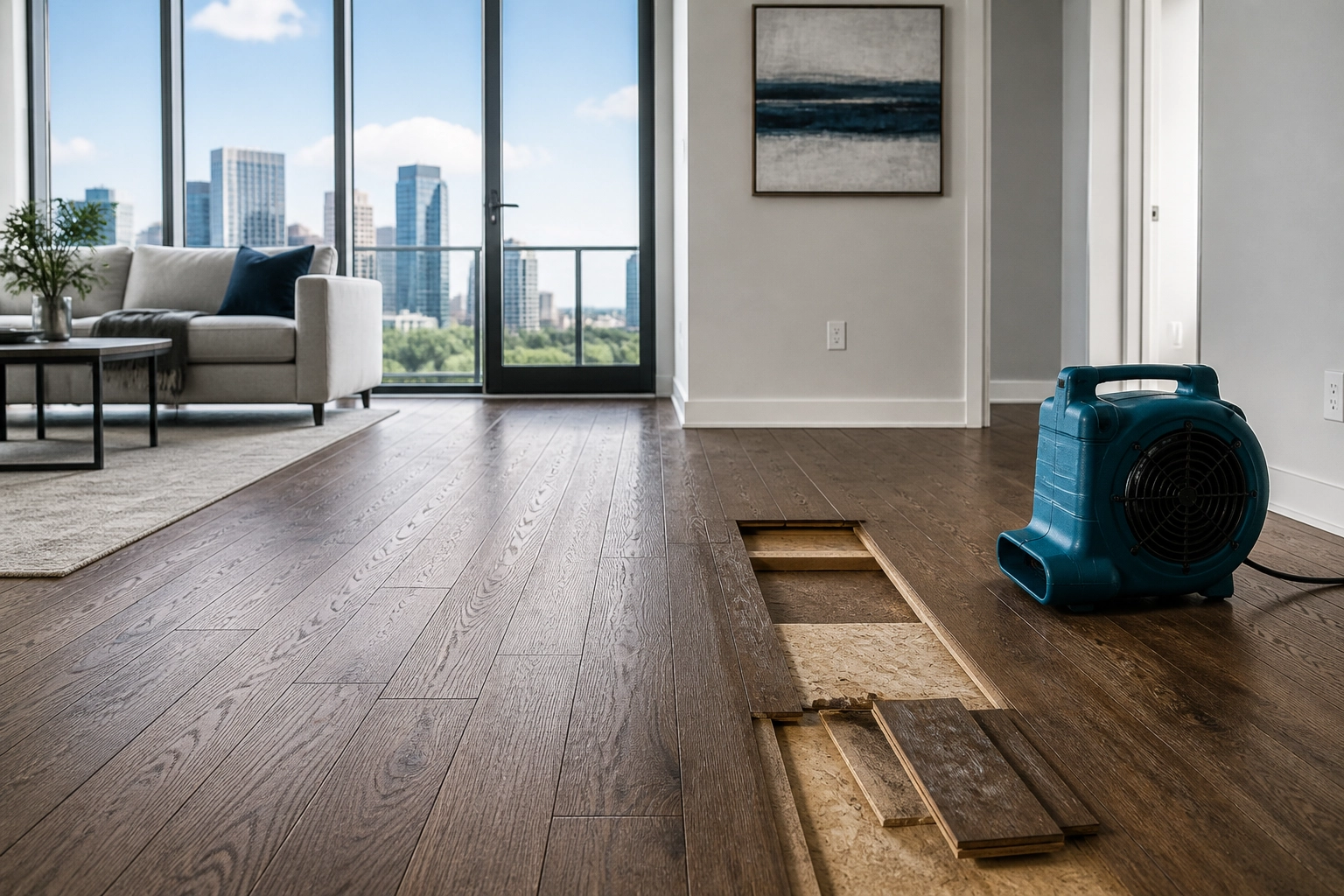
Water damage hardwood flooring in a Buckhead high-rise rarely gives you a simple yes or no. One board may cup at the seams while the next looks untouched. A finish can cloud in one room and stay clear in another. That uneven pattern is why the right scope starts with reading the floor board by board, not guessing from a single soggy corner. In a condo, the decision also runs into building rules: load-in paths, elevator booking, work-hour limits and neighbor impact all shape what a practical repair looks like. This post is a decision framework for intermediate readers. You will learn why water damage rarely fails a condo floor evenly, how to read cupping, finish damage and color change, and when selective plank replacement makes sense versus when the room, or even the assembly under walls, argues for full replacement. We will compare both scopes side by side, then walk through condo logistics, matching aged boards, cost drivers, and what Final Floors does and does not do after water damage. By the end, you will have a clearer way to decide your next step.
Why Water Damage Rarely Fails a Condo Floor Evenly
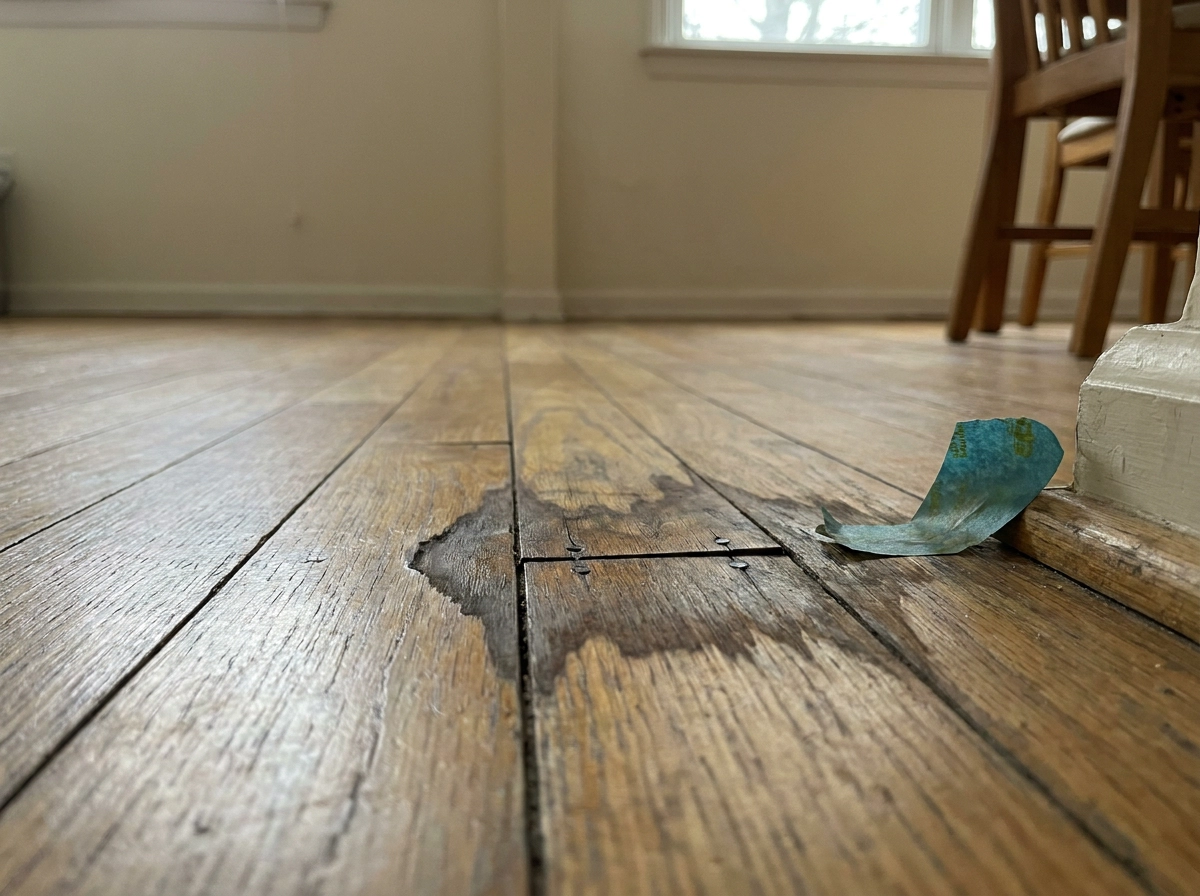
Water in a condo is not a spill. It follows the deck's low side, wicks along seams, board ends and nail lines, and pools where the assembly changes direction or material.
In a Buckhead high-rise, stacked units, shared plumbing walls and thin gypcrete toppings mean the wet spot you see often sits far from the source. A dry-looking side of the room can still read high for moisture.
Damage above the surface (finish loss, staining) and below it (cupping, edge swell, saturated subfloor) support very different scopes. NWFA guidelines call for conformance to local codes, HOA CC&Rs and climatic conditions, with manufacturer requirements superseding general guidance.
The building also controls load-in, elevator booking and work hours, so scope and access planning happen together.
So any water damage to wood flooring conversation starts with a dry, accessible floor inspection, not a phone description. See past project evidence for how varied these scopes look.
Read the Boards Before You Commit to a Scope
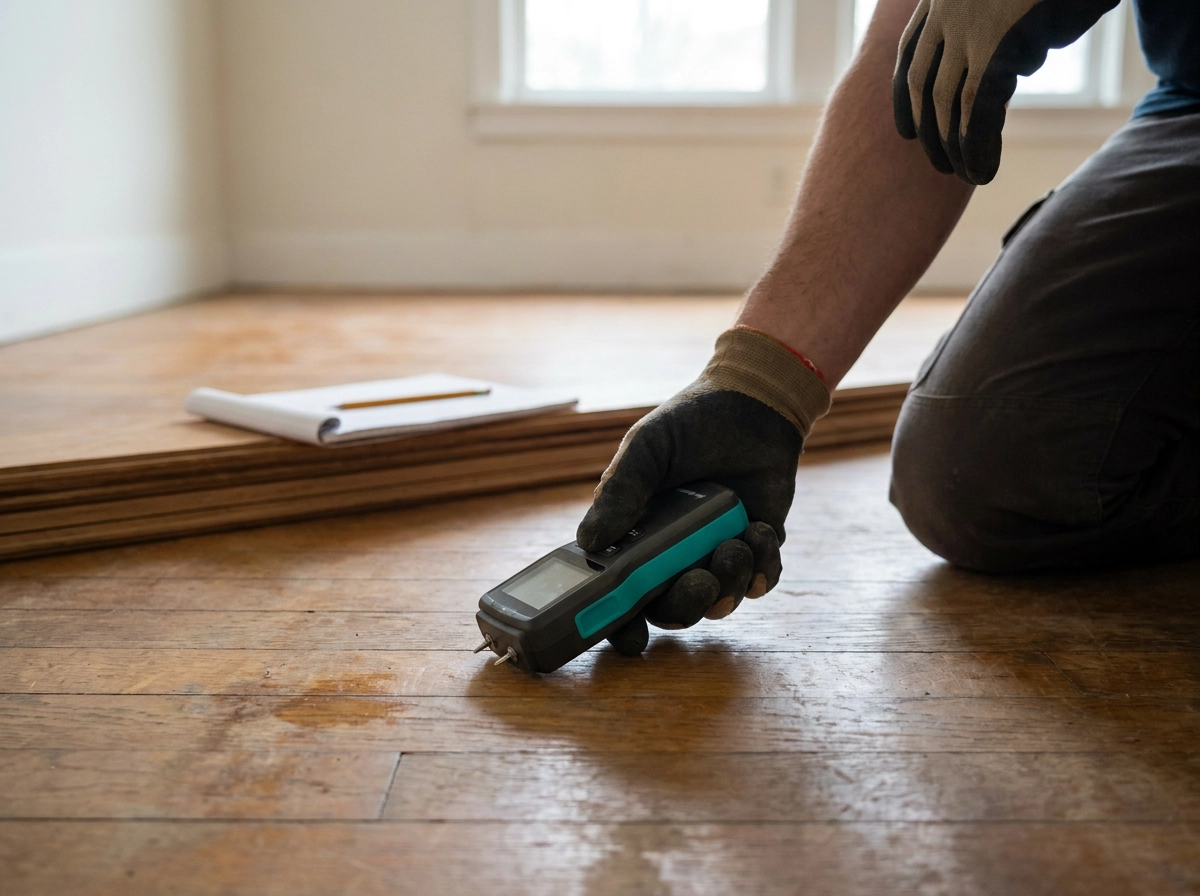
Once the floor is dry and accessible, read it board by board. Confirm qualified mitigation is finished and verified; Final Floors handles flooring putback only, not extraction, drying, mold remediation or fire restoration. Map the floor: photograph and number each affected board, trace the water's path, and circle spots where readings stay high after drying. Check moisture in the boards, subfloor and concrete deck against the product's specific requirements, because thresholds vary by manufacturer and assembly. After the floor stabilizes, measure flatness; some cupped boards recover, while others stay dished and show as dips after any refinish. Probe seams, board ends and transitions, where edge swell, finish failure and squeaks start. Write everything as a board-by-board list, which, not room size, tells you if selective plank replacement is realistic. If your list points to subfloor repair, that changes the scope.
What Cupping, Finish Damage and Color Change Actually Tell You
Interpreting that list:
Cupping, edges higher than the center, means moisture came from below or the subfloor stayed wet. Mild cupping can flatten as boards dry; deep or long-standing cupping will not.
Crowning, center higher than edges, often follows a floor sanded while damp. That points to replacement, not a spot fix.
Finish damage such as whitening, bubbling or peeling over flat, solid boards is the best selective-repair candidate. Color change is harder: dark rings at seams and stains tracing the leak path rarely blend, so repairs cannot stay small.
Soft edges, movement underfoot, or a subfloor still wet after mitigation point to the assembly below. Dents and scratches are a different problem, covered in how to protect hardwood floors from furniture.
When Selective Plank Replacement Is the Right Scope
Selective replacement earns its keep when water stayed put: a failed supply line at a bathroom wall, a dishwasher leak, or an entry threshold that dried quickly. The damaged boards should be flat or nearly flat, the subfloor should read dry, and the problem should sit mostly in finish and color, not structure. Then a lace-out can be woven into the field, and a board-by-board fix means less material, fewer elevator bookings, and a shorter disruption window. Matching species, width, thickness, and finish matters, and site-finished floors can be sanded and blended into the room. Even so, what can change a flooring scope applies: readings and an inspection must support the plan before anyone quotes a firm number. Selective work suits a minority of the room surrounded by boards worth keeping.
When the Room Should Be Replaced Instead
If damage covers most of the room, or appears in separate patches that together add up to most of it, selective plank replacement stops making sense. Cupping, crowning or edge swell across the field leaves visible dips and a patchwork finish no blending hides. Matching is another tipping point: a prefinished floor in a discontinued color or a distinct bevel is impractical to match, and replacing the room delivers one uniform result. If the subfloor needs repair, leveling or replacement across the same area, the labor advantage of patching disappears. A full room replacement also resets the wear layer and finish, so new boards don't age at a different rate than the survivors around a patch. When the plan shifts from planks to a full room, revisit building logistics too: access, staging and work hours all scale with the scope, as covered in Water-Damage Flooring Replacement in Atlanta: Plan Your Putback.
Damage That Has Traveled Under Walls and Into the Assembly
When water crosses a threshold, reaches a wall plate, baseboard, shoe molding, or the cavity behind it, the flooring edge is no longer the damage boundary. A plank-only scope will understate the work.
Saturated underlayment, gypcrete topping, plywood, or OSB sheathing cannot be sealed over. It must be dried, verified, and often replaced before new flooring goes down. If a transition keeps reading wet after mitigation, the assembly is the problem, not the board.
Opening the assembly expands the scope to subfloor repair and leveling, which Final Floors provides once mitigation is complete. Assembly work also drives what can change a luxury vinyl plank flooring scope. Ask management and the association, in writing, who owns which parts, since unit boundaries vary. Here, flooring replacement after water mitigation becomes an assembly conversation, and a written scope with inclusions and exclusions matters most.
Plank Replacement or Full Replacement: A Side-by-Side Look
With the assembly involved, the choice is selective plank replacement or full room replacement. Selective work removes and installs affected boards and blends the finish around them. Full replacement removes and reinstalls the room, including subfloor work where needed.
Disruption: selective is shorter but still needs dust control, staging, and dry-floor verification. Full replacement runs longer with more demolition.
Matching: selective depends on a compatible board and finish. Full replacement skips matching and gives one color and sheen.
Condition: selective leaves older, thinner finish around the repair. Full replacement resets the wear layer room-wide.
Access: both need building approval. Full replacement usually means more load-in trips, elevator time, and permitted work days.
Cost drivers: square footage, board availability, subfloor repairs, finish method, and building access. No flat per-square-foot number fits every unit.
If stair treads are damaged too, our staircase renovation guide covers that scope separately.
Condo Logistics: Load-In, Elevator Booking and Work-Hour Rules
Access can shape the calendar more than the flooring work, so settle it first.
Ask management, in writing, for the load-in route, freight or service elevator booking, protection requirements for cars and corridors, and permitted work hours. Verify early whether the association requires a certificate of insurance, a security deposit, contractor sign-in or a set delivery window.
Plan staging and cutting inside the unit or an approved area, and confirm where debris can legally sit. Book the elevator for the actual dates materials and crews arrive. Send management your dates, materials, crew size and estimated duration alongside the flooring scope, so both are approved as one package. Property access details drive other flooring work too, as our Metro Atlanta carpet installation guide notes.
Never assume an informal rule is current; only management's written confirmation for your building and dates applies. With access cleared, the next question is protecting shared space and keeping neighbors informed.
Neighbor Impact and Protecting Shared Space
Even a small water damage hardwood flooring repair still generates noise, dust and repeated foot traffic through shared halls, so plan around your neighbors rather than expecting the building to absorb it. Protect elevator interiors, corridors, door frames and thresholds with building-approved coverings, and move debris out in sealed containers only. Give adjacent units and the unit directly below advance notice, especially when the assembly is being opened and vibration will carry. Keep loud steps like removal and sanding inside permitted hours, and pause for any building quiet periods listed in the rules. Finally, ask management whether the association wants written notice, a posted notice or an elevator reservation notice for your dates.
Matching Replacement Boards to a Floor That Has Aged
With neighbor notices handled, matching becomes the next hurdle. Species, width, thickness, grade, edge profile and finish sheen all need to line up, not just the color in a photo.
Even one product line can read differently on an older floor because of light exposure, traffic wear and finish aging. Sample new material in the actual room before ordering.
On site-finished floors, refinishing or a screen-and-recoat of the surrounding area can help a repair blend. That is separate from installation. Finish systems like Bona, DuraSeal and Rubio Monocoat can be specified to match or refresh an existing sheen when scope allows.
Keep leftover boards from the original install. They help match milling, dye lot and finish and cut how much new material you order.
What Final Floors Does and Does Not Do After Water Damage
Knowing what a matching board can blend is one thing; knowing who does what after water damage is another. Final Floors handles flooring replacement and putback after qualified mitigation, including subfloor repair and leveling when the scope needs it. We do not perform water extraction, drying, mold remediation, or fire restoration. Mitigation must be complete and verified before flooring work is scheduled. Scope is decided after the dry floor is inspected on site, not from a description or photo, which is why estimates follow a visit. Estimates are project specific because materials, square footage, subfloor condition, and building access all change the number. Before installation, moisture, flatness, acclimation, adhesives, stairs, warranties, and return-to-use requirements are checked against the specific product and manufacturer instructions. Those variables are also what shape cost.
What Drives the Cost of Each Scope
Beyond that, five things move the number.
Ratio matters most. If damage covers a small share of the room, lacing in new boards usually costs less than replacing the field. If it covers most of the floor, selective work loses its labor advantage.
Board availability comes next. A compatible species, width, thickness and finish must be sourceable in the quantity you need; discontinued floors can stall a plank-only scope.
Then the subfloor. Repair, leveling and assembly work after mitigation is often the largest variable in either scope.
Finish is a separate line item. Spot finishing, screen-and-recoat and a full sand and finish carry different labor and material profiles.
Finally, building access: elevator booking, protection, permitted work hours and load-in trips all add coordination time.
FAQs About Water Damage Hardwood Flooring in a Buckhead Condo
Cost drivers set the budget; these answers usually settle the scope.
Can water damage hardwood flooring be saved with spot replacement? Only if boards stay flat, the subfloor reads dry and damage is finish or color. Cupping, crowning or soggy edges argue for more.
Did damage go under a wall or into the assembly? Watch thresholds and baseboards, recheck moisture after mitigation, and treat any wet edge or transition as assembly damage until verified.
Planks or the whole room? Compare damaged square footage, matching board availability, subfloor condition and building access.
Must I move out? Most single-room scopes do not require it, but containment, dust, noise and work-hour limits still apply. Plan around loud days.
Will new boards match? Only if species, width, finish and sheen line up. Refinishing or screen-and-recoat can close the gap. On water damage to wood flooring, matching often decides scope.
Who handles extraction and drying? A mitigation contractor, not Final Floors. Water damage wood flooring putback starts after mitigation is complete and verified dry.
Your Next Step: Photos, Building Rules and a Free Estimate
Start with what we need: your city and area, the existing floor type, approximate square footage, and a handful of photos showing the damaged boards and transitions. Add any building rules you've already confirmed for load-in, elevator booking and work hours, so scope and access get priced together.
Confirm mitigation is complete and the floor reads dry. Putback can't be scheduled before that. Then request a free project-specific estimate with written inclusions and exclusions, or begin with the project match tool at flooring-project-match-atlanta.
Call 770-910-9719, text 770-870-9876, or visit https://finalfloors.com.
Author: Final Floors, LLC.
Conclusion
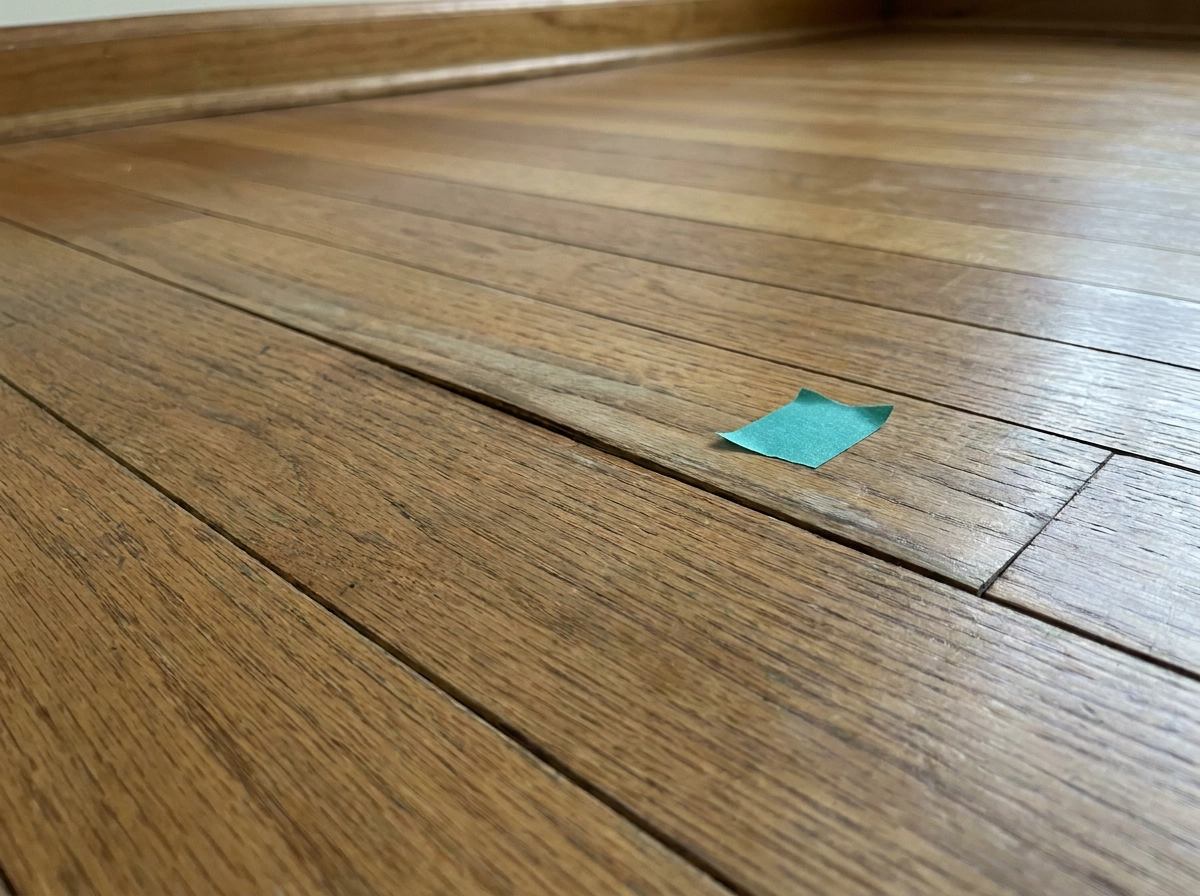
Water damage rarely fails a condo floor evenly, so read the boards before you commit to a scope. Cupping, finish damage and color change tell you whether selective plank replacement fits or the whole room should be replaced, and any wet edge or transition stays assembly damage until verified. Matching boards often decides the scope, and condo logistics like load-in, elevator booking and work hours belong in the same estimate.
Confirm mitigation is complete and the floor reads dry first; putback cannot be scheduled before that. Then share your city and area, existing floor type, approximate square footage, photos, and confirmed building rules. Call 770-910-9719, text 770-870-9876, or request a free project-specific estimate with written inclusions and exclusions, or start with the project match tool at flooring-project-match-atlanta.