Water Damage Floor Putback Checklist for Sandy Springs
By Final Floors LLC · Published
What mitigation records a Sandy Springs homeowner should hand to a flooring installer before LVP or carpet goes back down, and what they fix in the scope.
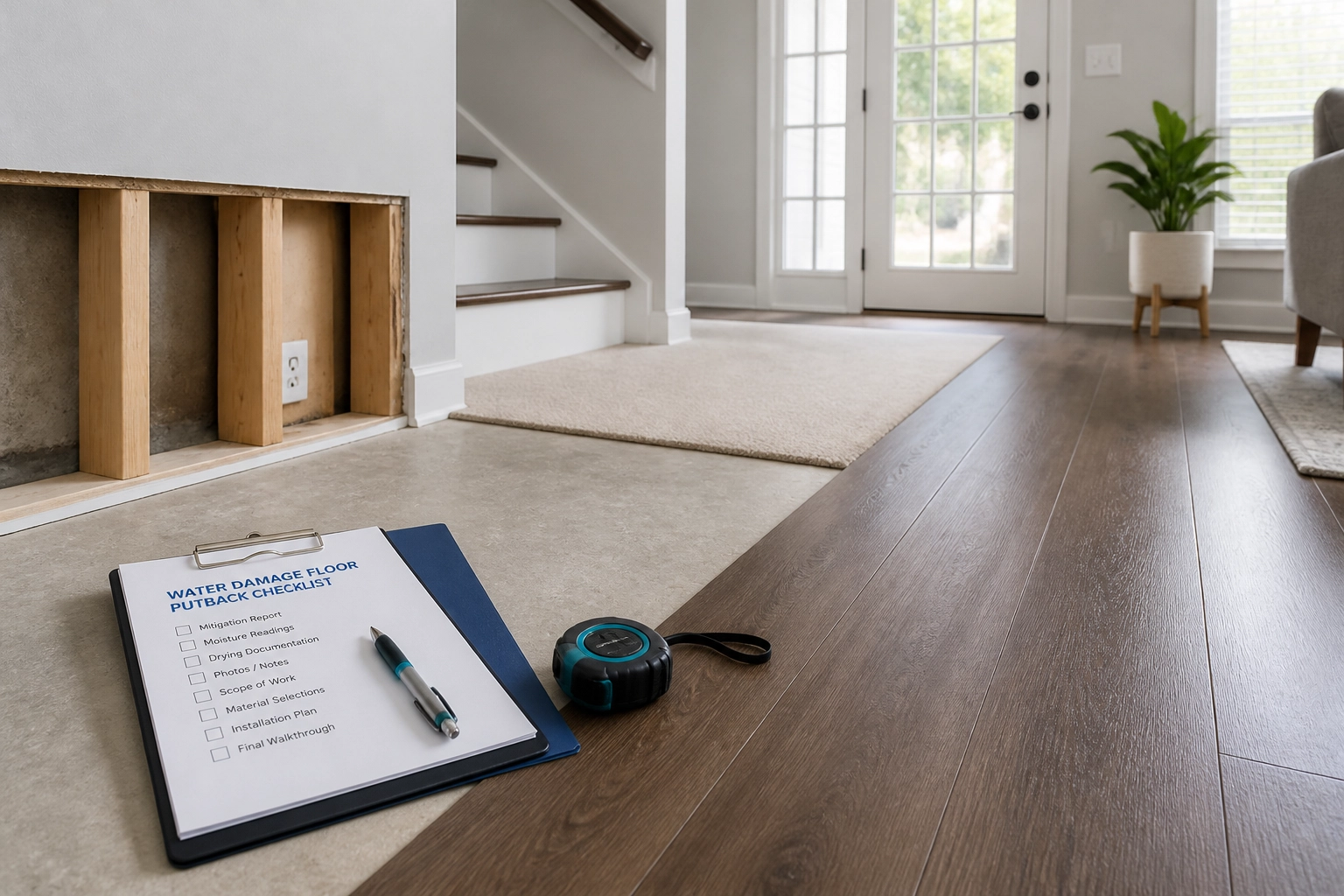
Your drying equipment is gone, the baseboards are off, and the flooring contractor is asking one simple question: is the water damage floor actually ready to go back down? In Sandy Springs, the answer usually starts in a folder, not in a plank. Putback begins with the mitigation handoff. The readings, affected-area map, removed-material record, and drying log tell the installer what was wet, what was removed, and what still needs confirmation before LVP or carpet goes down.
This post walks through that paperwork. You'll learn why the documents decide how your water damage floor putback gets scoped, how to request the mitigation file, what drying logs and psychrometric readings show, and how the affected-area map and removed-material record connect to the estimate. We'll also cover the S500 source statement, concrete slab versus wood subfloor records, what those papers let a water damage floor estimate specify, and what Final Floors, LLC does and does not do after water damage. FAQs and a Sandy Springs next step follow. Bring your Sandy Springs address, existing floor, and photos, then call 770-910-9719, text 770-870-9876, or request a free estimate.
Why the Paperwork Decides How Your Water Damage Floor Putback Gets Scoped
Your flooring estimate is only as precise as the mitigation file behind it. If the installer cannot see what got wet, how wet it was, and what came out, the scope gets written on assumptions.
Mitigation answers one question: is the structure dry? The flooring contractor answers a different one: is this subfloor ready to receive this specific product? Related, but not the same call. When records are missing, gaps tend to surface later as change orders, delays, or a stalled install day. Records handed over up front move that conversation to the estimate visit instead.
This is a documentation handoff, not a repair lesson. The mitigation company owns extraction, drying, and remediation. The flooring contractor installs once those records show the floor is ready. These same papers feed the service this checklist leads to, flooring replacement after water mitigation.
A one-page summary you write yourself is genuinely useful, even if it is just dates, rooms, equipment, and who did what. Pair it with the original documents when you can. Curious what can change this post-mitigation flooring putback scope? The papers answer that too.
How to Ask for the Mitigation File Without Getting Lost in a Claims Portal
Once you know why the file matters, ask for the complete job file in writing, by email if you can, and name each document: drying log, psychrometric readings, moisture readings at demolition and at completion, affected-area map, removed-material list, and any clearance documentation. A vague "can I get my paperwork" tends to return the invoice and little else.
If a crew is still on site, ask the lead technician before equipment is pulled; daily readings are easier to copy from an active job. If the job is closed, contact the office or your insurance adjuster, since mitigation firms and claim files often retain job records.
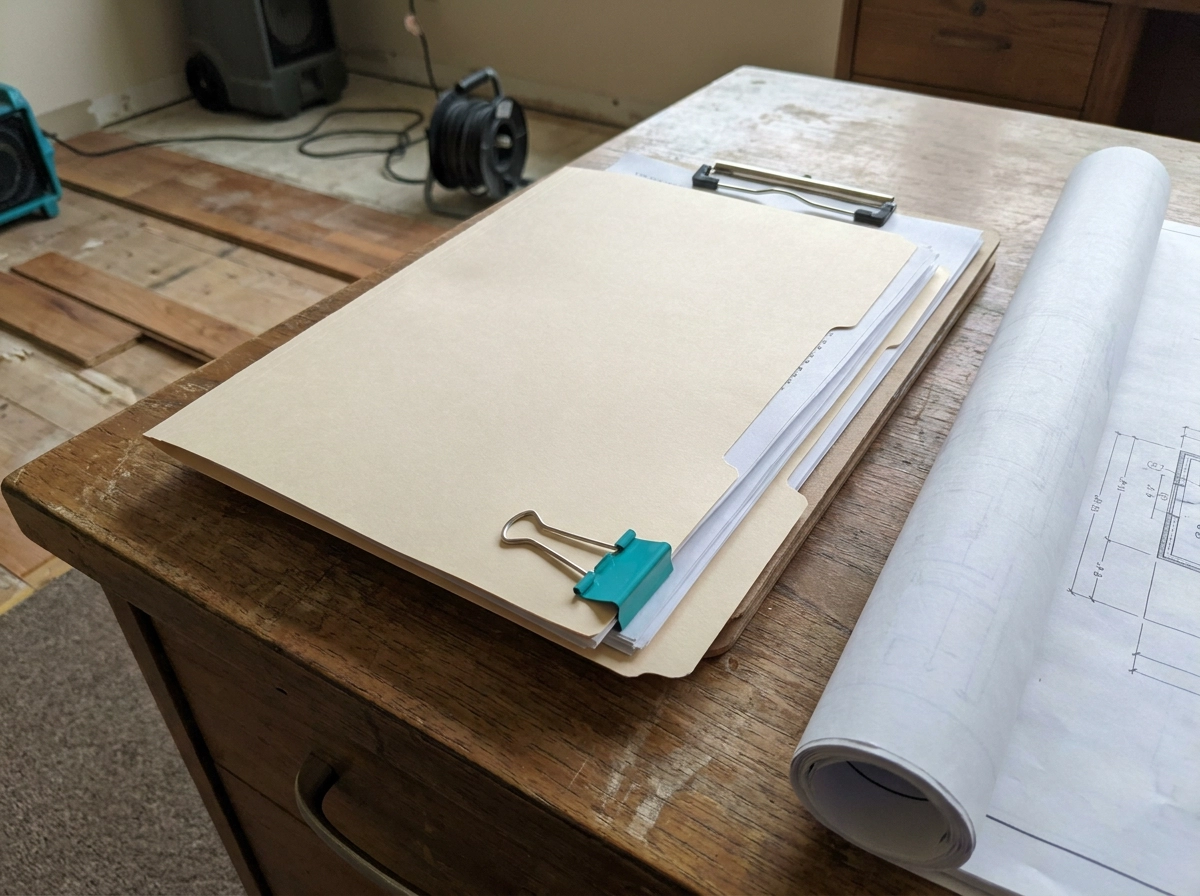
Keep the packet in one folder, digital or paper, so every contractor bidding the putback sees the same information. That also protects you if you switch contractors mid-project. Those records may reveal soft spots or uneven panels, and a written estimate should spell out which subfloor repairs are included before material is ordered.
Drying Logs and Daily Readings: The Timeline of What Got Wet
Once your request is in, the drying log is usually the most useful page in the packet. It is the day-by-day record of equipment placement, run hours, and the readings taken while drying was underway, room by room.
Your mitigation company keeps it, and a copy often went to your insurance adjuster.
Why your flooring installer wants it: it shows which rooms were affected, how long drying ran, and whether readings were still trending toward target when the equipment came off the job.
What it does not tell you is whether the subfloor is ready today. A drying log is history. The putback decision needs current readings taken close to the install date.
If the log is missing, ask for dated equipment photos or daily notes. Expect the estimate to flag that affected area as unverified until someone checks it, and get that check done before material is ordered. Then keep it with the rest of the packet so every contractor bidding the putback works from the same timeline.
Psychrometric and Moisture Readings: The Numbers a Water Damage Vinyl Flooring Estimate Needs
Drying logs tell the story of what happened. Psychrometric readings do something narrower: they track air temperature and relative humidity, the conditions the drying equipment was working against. They explain the drying strategy, not whether your floor is ready.
The numbers that matter for flooring are subfloor moisture readings taken at demolition and again at completion. Get both ends of that timeline, not just the last one.
On a concrete slab, industry guidance treats in-situ RH measurement as a more reliable indicator of slab conditions than surface readings alone, and ASTM F2170 formally recognizes in-situ probes as a means of conducting RH testing. Moisture migrates upward through a slab toward the surface, which is why surface-only checks can understate internal moisture levels. A dry-looking slab is not a measurement. RH simply means how much moisture the air or slab holds relative to what it could hold at that temperature.
Timing counts. A reading taken weeks before the install date is a starting point; a reading taken close to the scheduled install date is what actually governs.
The Affected-Area Map and the Removed-Material Record
Readings tell you whether the subfloor is ready. The map tells you where. The affected-area map, sometimes just a hand sketch, marks the wet zone's boundaries: which rooms, how high up the wall, and where moisture stopped. The removed-material record lists what came out during mitigation: baseboards, shoe mold, underlayment, carpet and pad, plank flooring, and sometimes drywall.
Together they define what must be replaced and what does not, so the flooring scope stays out of rooms that never got wet. Build your replacement plan from that list. Whether pad and underlayment are reusable depends on the water category, how quickly drying began, and the specific materials, in-place drying on Category 1 losses can sometimes avoid pad removal, but the removed-material record will show what actually came out. Baseboards and shoe mold may need matching profiles. For residential carpet or commercial carpet tile, confirm with the installer which prep steps and transitions are included in the scope. Photos of removed material help, especially if you want the replacement to read like the original floor.
The Written Source Statement: Who Owns the Fix Under S500
The map and removed-material list tell you what got wet and what came out. One record answers a different question: is the source actually fixed?
ANSI/IICRC S500, the standard covering water damage restoration in residential, commercial and institutional buildings, assumes that correcting the underlying source of water intrusion is the property owner's responsibility, not the restorer's. So a flooring estimate should not assume a supply line, drain or exterior leak has been resolved unless the paperwork says so.
Readiness and source repair are two separate items. Ask at the estimate visit: what was the source, and what documentation shows it was corrected? If the answer is unclear, treat the area as unconfirmed rather than ready.
The IICRC notes that its S500 Consensus Body has begun work to revise the 2021 standard, so documentation expectations may shift over time. For now, the 2021 edition is the current reference.
That sets up a practical split: concrete slabs and wood subfloors, checked differently.
Concrete Slab vs. Wood Subfloor: Different Records, Different Limits
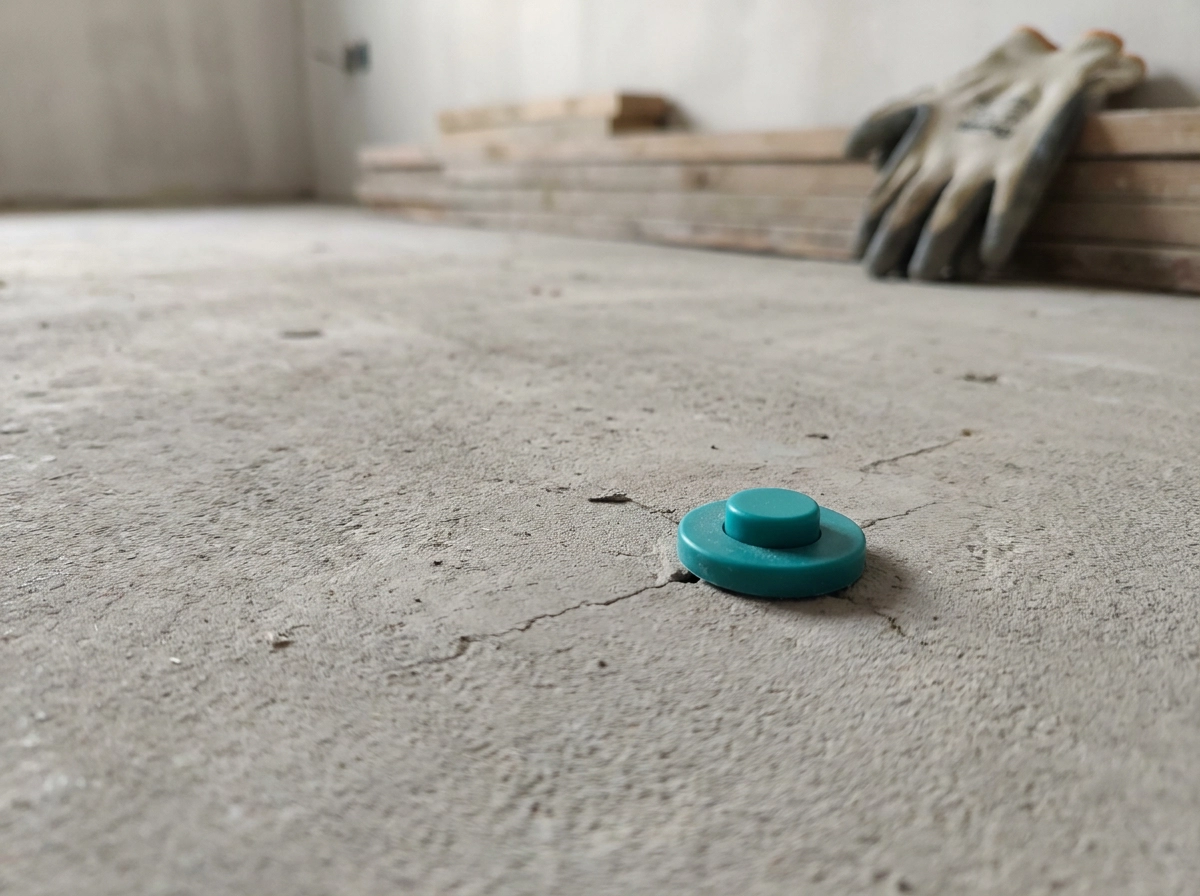
Once the source question is handled, the next split is your subfloor itself. Trade coverage of pre-installation moisture leans heavily toward concrete slabs, but plywood and OSB panels behave differently and get checked differently.
On a slab, in-situ RH testing reads moisture inside the slab rather than at the surface alone, as noted in the Psychrometric section above.
On a wood subfloor, two checks matter: moisture content in the wood itself, and the physical condition of the panel. Look for soft spots, delamination, swelling, squeaks, or fastener movement since the loss.
Neither the drying log nor this article sets an acceptable number. The manufacturer's installation guide for your specific product, LVP, carpet, or wood, governs what is acceptable. That guide also shapes what can change this luxury vinyl plank flooring scope. Ceramic tile installation falls outside our scope and requires a separate contractor.
What Those Papers Let a Water Damage Floor Estimate Specify
Those records convert into scope decisions. A water damage floor estimate can name which rooms are ready for flooring now and which are waiting on a current reading before anything gets scheduled.
Subfloor repair and leveling: moisture damage, removed underlayment or swollen panels can leave the subfloor outside the flatness the product requires, so it becomes a line item instead of an install-day surprise.
Acclimation: many LVP and wood products need material on site for a period before installation. The manufacturer's guide sets the duration, so the estimate can state whether an acclimation window is built in.
Underlayment and pad: the scope should confirm what the mitigation records show was removed and name the replacement material, since reuse depends on water category, drying speed and material type.
Written exclusions: source repair, mold remediation, tile, drywall and paint are listed so nobody guesses where the job ends. What can change this flooring project planning scope? helps you match your situation to the right one.
What Final Floors Does and Does Not Do After Water Damage
Final Floors installs luxury vinyl plank and tile, residential carpet and commercial carpet tile, and solid and engineered hardwood, plus subfloor repair and leveling, refinishing, screen-and-recoat and stair renovation. Who we are and what we install covers the full menu. Extraction, drying, mold remediation, fire restoration and ceramic tile are outside our scope, as covered above.
At the estimate visit, we read the mitigation file you collected, verify conditions on site, and write the putback scope with that specific product's installation requirements in hand. We don't publish universal moisture tolerances, we won't call a floor dry enough without a current reading, and we don't make certification, dealer-status or guarantee claims beyond the product's own written terms.
If your Sandy Springs condo or HOA property needs approval before work starts, ask your association what it requires and bring that paperwork to the estimate.
FAQs About Water Damage Flooring Putback After Mitigation
Can LVP go back over a slab that had water?
The loss doesn't decide it. A current moisture reading that falls inside the range the LVP manufacturer's installation guide allows does, so ask for both. When reselecting LVP, confirm wear layer thickness with the product's installation guide before ordering.
Do I need new underlayment and pad?
Pad and underlayment often come out during mitigation and may not be reusable, but reuse depends on water category, drying speed and material type, your mitigation's removed-material record will say what was actually taken out.
What if the mitigation company closed the file?
Ask your insurance adjuster for the claim file, then gather equipment photos, receipts and any readings you kept. The estimate can flag what stays unverified.
Will insurance pay for putback?
That depends on your policy and claim, so ask your adjuster. A written scope with photos and mitigation records submits more easily than a verbal number.
How soon can flooring go down?
After the source question is answered and a current reading supports the install. Many products also need acclimation time on site first.
Do you handle water removal too?
No, see the scope section above for what we do and don't cover.
Your Next Step in Sandy Springs
Now that you have the packet sorted, here is where it goes.
Send us your city or area, the existing floor (LVP, carpet, hardwood or tile), and a few photos of the affected rooms, the subfloor if it is exposed, and whatever mitigation records you have in hand. Call 770-910-9719 or text 770-870-9876 to request a free project-specific estimate.
Final Floors is family owned and has served Metro Atlanta from Roswell since 2016, including Sandy Springs, Atlanta, Buckhead, Midtown, Roswell, Alpharetta, Johns Creek, Marietta and East Cobb.
Expect a written scope that separates what is ready, what still has to be verified, and what is excluded. That way, the putback decision rests on documents instead of impressions.
Published by Final Floors, LLC. If any photo in this piece is a generated scene, it is labeled as an illustration and never presented as a customer job.

Conclusion
Your water damage floor putback starts with paperwork, not guesswork. The mitigation file, drying logs, moisture readings, affected-area map, removed-material record, and written source statement tell the real story, separating ready areas from items still needing verification and spelling out exclusions so the scope matches what actually got wet and what actually came out.