Stretch-In, Glue-Down or Carpet Tile for Atlanta Offices
By Final Floors LLC · Published
Compare stretch-in, glue-down and carpet tile for Metro Atlanta offices: slab moisture testing, seam layout, repair granularity and lease-end terms.
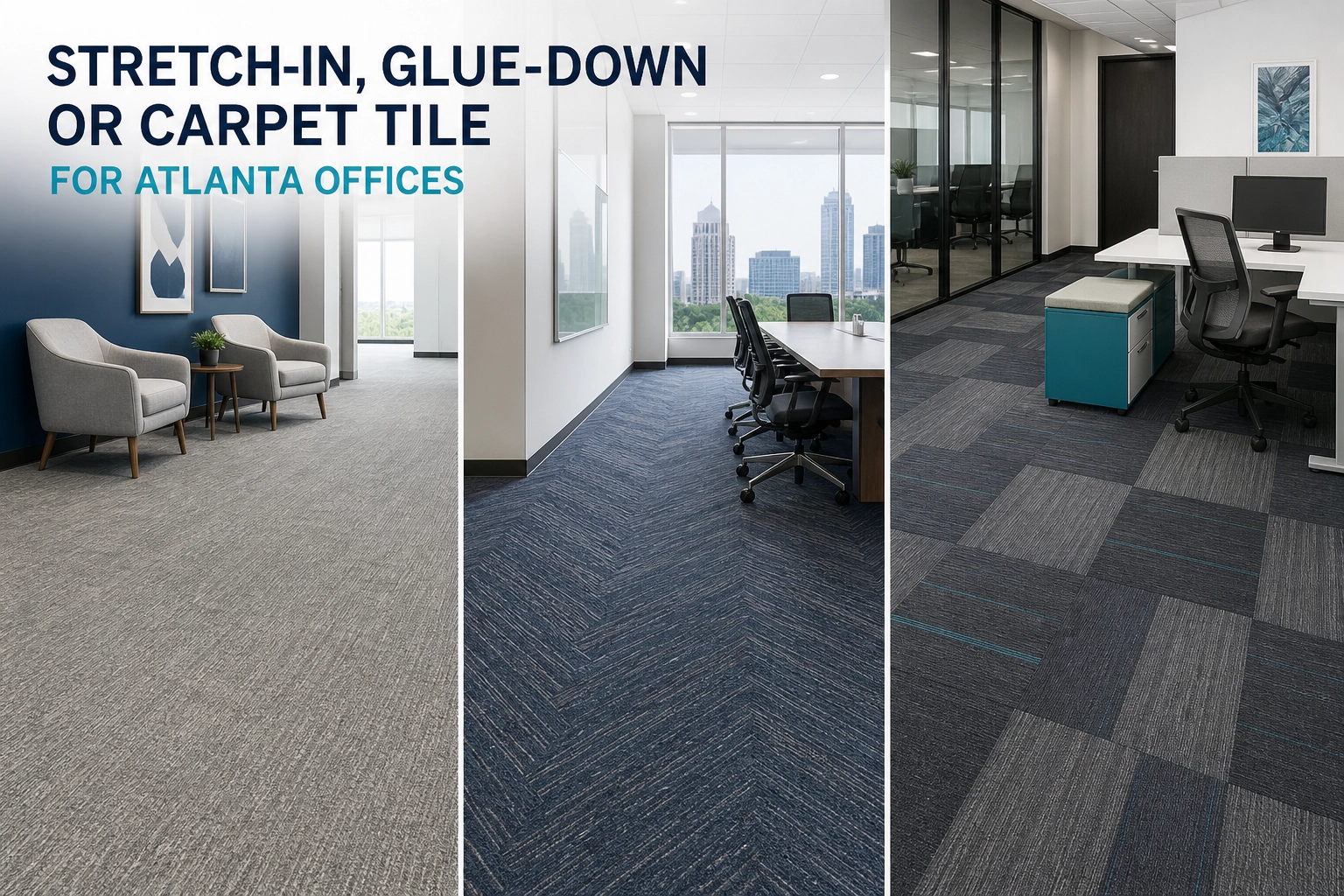
Three offices on the same Atlanta street can need three different floors. A suite with heavy after-hours traffic and a slab that reads wet calls for a different answer than a quiet office with sunlight across a broadloom field. The choice is mechanical before it is aesthetic. Stretch-in, glue-down broadloom, and commercial carpet tile flooring each solve a distinct set of problems: repair granularity, slab moisture tolerance, seam layout, and how quickly a damaged area can leave service.
This comparison is written for facility managers and office tenants who specify or approve flooring in Metro Atlanta. We start with the space and the maintenance plan, then define what each system actually is. From there, we cover slab moisture testing before any system choice, entry and corridor wear, repair granularity, roll goods and seam planning, adhesive selection and after-hours access, and what each system owes the tenant at lease end. Final Floors, LLC works on commercial carpet tile and LVP across Buckhead, Midtown, Roswell, Alpharetta, Sandy Springs, Marietta, Smyrna, Duluth, and Peachtree Corners.
Start With the Space, Not the Sample Table
Stretch-in, glue-down broadloom and carpet tile are not three finishes competing for one problem. Each answers a different failure mode: slab moisture, concentrated damage, seam layout across roll goods, or downtime in an occupied suite.
Spec mistakes usually start at the sample table. Color and texture get chosen first, then installation method, adhesive and maintenance plan get reverse-engineered around a product that may not tolerate the slab or the traffic feeding it.
This is a specification comparison for facility managers and office tenants in Metro Atlanta deciding what to put in writing, not an installation walkthrough. Six axes drive that decision: slab moisture and testing, traffic and entry or corridor wear, repair granularity, roll-goods and seam layout, after-hours access and downtime, and lease-end obligations. The prep, seams and transitions behind professional carpet installation apply to all three.
One more reason to resist the sample table: the CRI 2011 installation standard states in its foreword that it excludes carpet performance characteristics. A defensible spec cites both an installation standard and a separate performance or selection source.
What Stretch-In, Glue-Down Broadloom and Commercial Carpet Tile Flooring Actually Are
The three systems differ first in how they attach.
Stretch-in broadloom is wide roll goods stretched over tackless strip and cushion on a sound underlayment. Seams run the roll's length, and repair means cutting back to a seam or building a new one.
Glue-down broadloom bonds roll goods directly to the slab or subfloor with adhesive. CRI 2011 treats direct glue-down, double glue-down, attached cushion, stretch-in and modular carpet as separate installation methods, each with its own section.
Modular systems, often searched as commercial carpet tile flooring, are individual tiles or planks on a modular grid. The repair unit is the tile, not the roll, and layout is as much a design decision as an installation one.
Commercial flooring carpet tiles often means a mixed spec where the tile field meets LVT, ceramic or bare concrete at entries and thresholds, so transitions belong in the same shop drawing.
CRI 2011 lists adhesive types in Table I and trowel sizes in Table II, but the manufacturer's written requirement for your product governs. Ask for it, not a generic spread rate.
Slab Moisture Comes Before Any System Choice
Moisture decides this specification before style does. CRI 104 covers moisture vapor emission rate (MVER), relative humidity, and alkalinity testing, plus concrete moisture mitigation. These tests are part of the standard, not an upsell, and a Metro Atlanta slab is no exception.
Glue-down bonds adhesive directly to the slab, into the same interface moisture already moves through, making it the most sensitive of the three. Stretch-in sits on underlayment but still needs a sound, dry substrate.
Carpet tile may tolerate what broadloom cannot, but the tolerance belongs to the specific product and backing system. Ask the manufacturer for the written moisture, flatness, and adhesive requirement.
Remediate moisture issues before installation. Final Floors does not provide water extraction, drying or mold remediation, engage a qualified mitigation provider first.
For the bid, put test results, any mitigation scope, and the flatness requirement in the written proposal. Untested slab, guesswork spec, warranty attached. See what a Metro Atlanta subfloor estimate should include for the preparation side.
Traffic Patterns, Entry Zones and Corridor Wear
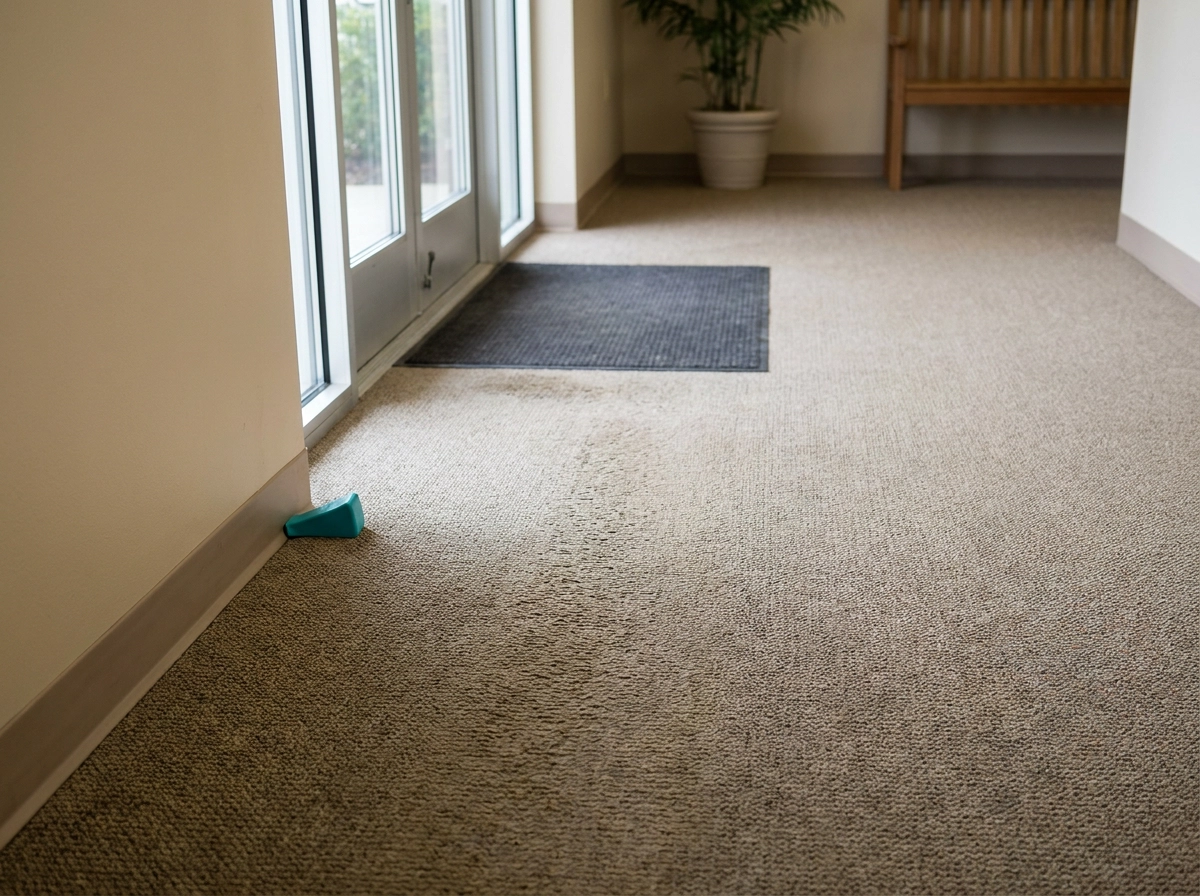
Treat this as a decision framework, not a forecast. Installation standards carry no traffic-wear data, so map the suite: main entry, walk-off zone, primary corridor, break area, copy and print station, reception.
Entry and corridor wear is a soil-management problem as much as a carpet problem. Walk-off matting, cleaning frequency and vacuum access all influence how quickly a field develops a visible traffic lane. Those decisions live in the maintenance plan, not the sample, along with other factors that shape a commercial flooring scope.
Where wear concentrates in strips, modular tile lets you replace the worn run and leave the rest in place. Broadloom reads that wear as a faded lane, a sheared area or a rebuilt seam.
Ask the manufacturer and maintenance provider for expected appearance retention on the specific product, backing and color, then compare that to how the space is actually cleaned. Category guarantees do not transfer between products.
Color carries end-of-lease cost. Darker or patterned fields hide soil better than light solids, which changes landlord expectations at turnover. Repair speed comes next.
Repair Granularity: How Fast Can a Damaged Area Leave the Floor
Wear and sudden damage fail differently. Carpet tile has the finest repair granularity of the three. A stained tile can be lifted and replaced in a single service visit if attic stock is on site and the layout keeps one tile from standing out, as in a running line or non-directional pattern.
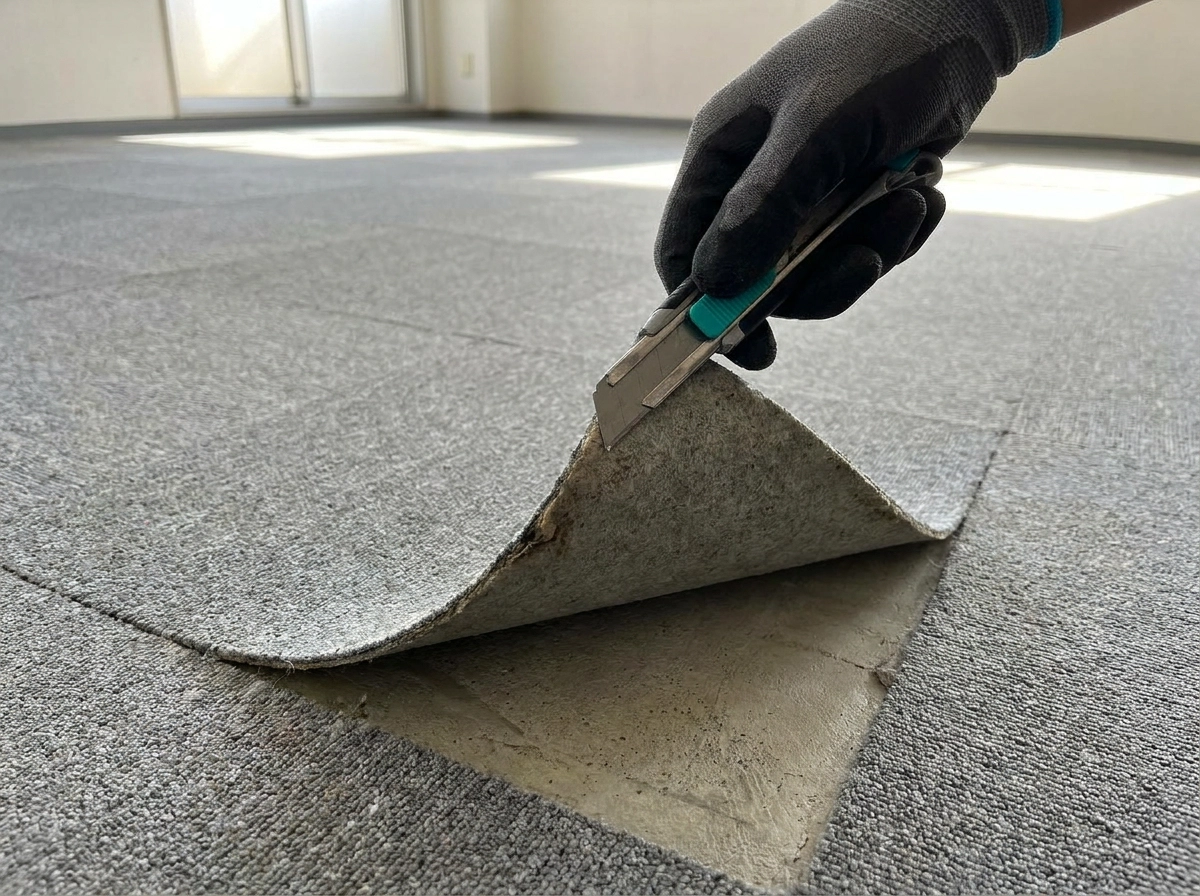
Glue-down broadloom is coarser. Repair usually means cutting back to a seam or creating a new one in the field, which takes longer to schedule and reads more visibly afterward. Stretch-in behaves similarly but may also require re-stretching and re-seaming with power-stretch equipment and a crew familiar with the attachment detail, which affects response time and who can perform it.
Attic stock is the cheapest insurance in any system. Order extra from the same dye lot at installation and store it dry and labeled, because dye lots and pattern runs may not be available later, so ordering attic stock at installation is the safest approach. It matters after flooring replacement following water mitigation too, where spare material is easy to overlook.
Put the repair response in writing: who performs it, the response window, after-hours billing, and warranty versus maintenance.
Roll Goods, Seams, Pile Direction and Pattern Matching
Repair granularity sets response time; layout sets appearance. CRI 104 covers shop drawings, seam planning, transitions to other surfaces, carpet over expansion joints, pile direction and pattern matching. That drives roll-goods layout, so resolve it before the order goes in, not the day the crew arrives.
For broadloom, draw the seam layout first. Roll width, pattern repeat, dye lot and pile direction together set where seams can fall. Ignore them and the field reads wrong under raking light.
Modular layouts read differently: modular tiles can be laid in multiple orientations, each creates a different visual rhythm at tile edges. Ask for a layout drawing with tile orientation marked, and approve it.
Transitions to LVT, ceramic tile or exposed concrete at entries, corridors and thresholds need their own shop-drawing detail. Late decisions on floor height and edge condition cause callbacks. For what else can shift during planning, see What Can Change This flooring project planning Scope?
After-Hours Access, Adhesive Choice and Downtime
Layout approval settles the drawing; the schedule settles the tenant.
Glue-down introduces adhesive cure time, and the return-to-use window varies by adhesive, ventilation, temperature and humidity. Confirm the manufacturer's written return-to-use requirement for that specific adhesive before promising a Monday morning reopening. CRI's disclaimers assign the specifying authority responsibility for reviewing local, state and federal rules, including OSHA Hazard Communication requirements, which shapes adhesive selection and what the crew needs on site.
In common practice, stretch-in and modular installations can often be phased by zone, keeping occupied work areas in service while another area is worked. Phasing is a scope decision, so it belongs in the proposal, not in a mid-project conversation.
Ask about building logistics early: elevator, loading dock and freight windows, after-hours permits, and noise or dust limits during business hours.
Write downtime in tenant language. Name the areas out of service, the hours they are down and when they return. When a moisture fix changes the plan, project case studies show how the scope shifts.
What Each System Owes the Tenant at Lease End
Downtime is a cost you can schedule. Turnover is a negotiation, and lease language controls it, not the carpet. No installation standard sets removal, restoration or replacement responsibility, and surrender provisions are often glossed over. Review your lease with a commercial real estate professional before treating any system as low-risk.
Ask whether the lease requires removal to bare slab, removal of adhesive residue, or restoration to a prior condition, and who pays for each scope. Answers often differ between a full-floor tenant and a suite tenant in a multi-tenant building.
In practice, modular tile lifts tile by tile, and sound material can sometimes be reused if pattern, dye lot and backing hold. Installers generally find that broadloom is typically discarded because it is cut and adhered or stretched to the room.
Documentation protects you: photograph the floor at move-in, keep cleaning and maintenance records, and store labeled attic stock to answer a punch list with evidence.
Put removal and disposal in the written scope before you sign a renewal or new lease. In practice, a cheaper installation costs more at turnover if adhesive cleanup was never priced.
Matching the Spec to Your Maintenance Plan
Removal and disposal are priced. The lease still cannot answer: can your team maintain what you install?
Match the system to the equipment and staffing you have. A broadloom field that misses its vacuuming schedule ages faster than a modular layout where worn tiles are swapped individually. Over a lease term, that spot-repair flexibility may cost less than replacing a broadloom field that outpaces your maintenance program.
Requirements vary by product; ask in writing, not by rule of thumb. See What Can Change This flooring project planning Scope? for shifting variables. The scope items covered in earlier sections, testing, layout drawing, adhesive choice and phasing, all belong in the written proposal.
Ask what the warranty covers, installation, material or both, and what voids it: unauthorized cleaning, wet extraction the product does not support, adhesive substitution, repairs by unapproved installers. Then specify attic stock: location, quantity, dye lot, and who may perform repairs. Finally, ensure entry and threshold transition details align with the occupied-suite phasing plan so the shop drawing, schedule and tenant hours agree.
Questions Facility Managers Ask Before Specifying
With maintenance set, these questions decide the spec.
Does my office slab need moisture testing? Yes. CRI 104 covers MVER, relative humidity and alkalinity testing, and mitigation comes before installation. Glue-down is the most moisture-sensitive system because it bonds directly to the slab. See the slab moisture section above for scope details.
Is commercial carpet tile better than broadloom for an office? It depends on where wear concentrates, how fast a damaged area must leave service, and what the lease says about removal. Tile wins on repair granularity and turnover flexibility; broadloom can win on seamless field appearance.
Can we glue down over a slab with moisture problems? No. Remediate first. See the slab moisture section above for scope details.
How long should commercial carpet last? There is no category answer. Appearance retention depends on the product, backing, traffic pattern and cleaning program; ask the manufacturer for data on yours.
Will tile edges show in a monolithic layout? Depends on layout, pattern and lighting. Approve the marked layout drawing before ordering.
Next Step: Test, Draw, Then Specify

Four actions close the loop: test the slab before an adhesive-bonded system; draw seams, pile direction, pattern matching and transitions before ordering broadloom; keep attic stock for your chosen system; and write return-to-use windows, after-hours access and lease-end removal into the scope.
For a Metro Atlanta suite, send the city, square footage, existing floor, and photos of the space, entry and known slab issues. Final Floors is based in Roswell and works with offices, retail, churches, restaurants and commercial spaces across Metro Atlanta.
Request a free project-specific estimate and mobile material selection: call 770-910-9719 or text 770-870-9876. Compare your options against our flooring project match, and review the commercial flooring service page for the scope Final Floors installs and what it does not. Bring the maintenance plan to the estimate conversation: traffic pattern, cleaning method, staffing and lease terms decide the spec more reliably than a sample table.
Conclusion
Each carpet system solves a different problem in an office suite. Test slab moisture before any adhesive-bonded system, then draw seams, pile direction, pattern matching and transitions before ordering. Plan traffic zones, repair granularity, after-hours access, adhesive choice, downtime and lease-end removal as part of the written scope. Keep attic stock and match the spec to your real maintenance plan. Start with the space, verify the details, and specify with confidence. Call 770-910-9719 or text 770-870-9876 to request a free project-specific estimate and mobile material selection.