Soft Spots and Squeaks: A Smyrna Subfloor Inspection
By Final Floors LLC · Published
Soft spots, squeaks and bounces are evidence, not diagnoses. See what a subfloor inspection checks in a Smyrna home before any repair gets priced.
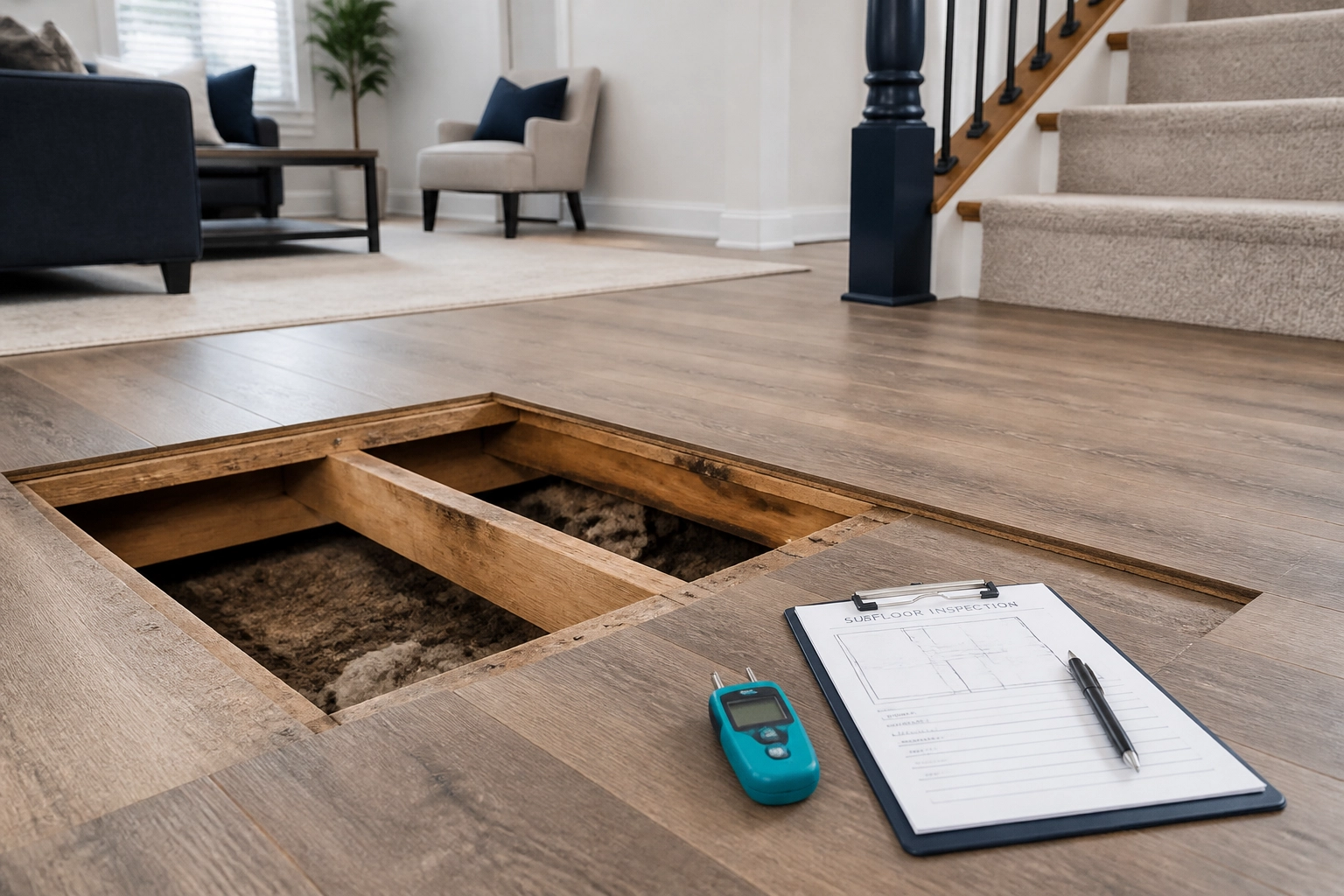
Notice a soft spot under your feet? Hear a squeak when you cross the hall? Feel a bounce or see a slope? Those are clues, not conclusions. In Smyrna homes, the same symptom can point to different causes, and guessing at it can send any repair subfloor project in the wrong direction.
This post is a beginner-friendly teardown of subfloor symptoms: soft spots, squeaks, bounces, slopes, and low spots. We will walk through what each sign shows you, what it does not prove, and why an inspection comes before any work is priced. You will also learn what a subfloor inspection is actually for, where the scope can land once inspection is done, where the floor ends and another trade begins, and why a guess-first estimate usually goes wrong. We will cover what to have ready when you request a subfloor estimate, plus common Smyrna homeowner questions. Final Floors, LLC handles subfloor repair and leveling, and we do not provide water extraction, drying, mold remediation, or fire restoration. Let's separate evidence from diagnosis before anyone quotes a fix.
A Soft Spot Is a Clue, Not a Conclusion
You step across the living room and it dips. A hallway squeaks. The floor leans, or a board gives underfoot. That is information, not a verdict.
Soft spots, squeaks, slopes and bounces are evidence. They tell you where to look, not what failed. No honest scope comes from a description alone, and a repair priced by phone is a guess. Scoped after inspection, it matches the floor you actually have.
This is for Smyrna homeowners who searched repair subfloor or floor repair near me and want to know who to call, in what order, before a number gets quoted. Ahead: what each symptom shows and does not prove, what an inspection is for, where scope can land, and what to have ready.
Why One Symptom Can Have More Than One Cause
Two floors can squeak for different reasons: movement between the finish floor and the layer beneath it, a panel seam, a loosened fastener, or deeper framing. Each is a different fix, sometimes another trade.
Symptoms overlap. A dip and a soft spot feel identical underfoot; a bounce passes for a slope. Feeling cannot separate them.
Vocabulary: the subfloor is the structural panel over the framing; underlayment is the layer between subfloor and finish floor; the flooring assembly is everything above the framing; joists are framing members.
Causes overlap, so an inspection confirms what is inside the assembly and flags what is outside it, which is what your estimate should include. Skip symptom-to-repair shortcuts online; nothing here diagnoses your floor.
What Each Symptom Shows You, and What It Does Not
Each symptom is a location and severity clue. Together they tell an inspector which rooms to measure and which areas to open first.
Squeak: narrows where movement happens and when. Cannot prove which layer is moving.
Bounce: narrows how wide the flex travels. Cannot prove a damaged subfloor.
Slope or dip: narrows where the plane changes. Cannot prove the cause sits under the floor.
Soft spot: narrows how much of the surface gives. Cannot prove what caused it; if water is suspected, flooring putback after mitigation follows separate drying and clearance.
None of the four proves rot, an active leak, or structural failure. That gap between signal and proof is why inspection comes before pricing.
Squeaks: Movement You Can Hear
A squeak is movement you can hear as load shifts. That shift can sit between the finish floor and the underlayment, at a panel edge, at a fastener, or lower in the assembly. Where you hear it is unreliable, because noise travels along panels and framing. So a squeak does not prove the subfloor needs repair, and it does not rule it out; it narrows where to look.
Pattern beats volume: every step or one landing, all year or only when the heat runs, one room or a whole hallway. There, an inspection checks where panels and seams sit, whether layers move independently, how flat the surface is, and what is visible from below.
A Bounce or a Give Underfoot
A bounce is felt, not heard. That is deflection: the floor flexing under a live load instead of staying put.
The flex can come from a finish board spanning a gap, a panel condition in the assembly, or the framing and how far apart it sits.
Width matters: one span that dips reads local, while a wide soft area says the inspection should reach further.
A bounce still does not confirm subfloor damage, or tell you whether the answer is leveling, re-securing or replacing panels. It tells you the floor is moving more than it should.
Do not test it by jumping. Note where it happens, how long it has been going on, and whether it has gotten worse.
Slopes and Low Spots
A bounce is felt. A slope is measured. A slope is a change in plane across a room; a low spot is a dip within that plane. Both are judged against flatness, not whether the house is level.
A floor can slope from what's underneath it, from installation over an uneven base, or from movement that predates the current floor. Flatness, moisture, acclimation and adhesive requirements come from the flooring product itself, so we won't hand you one universal number.
Some slopes belong to another professional, such as when evidence points toward structural movement. Inspection here is measurement: where the plane changes, by how much, and whether it follows a seam, a beam line or a room edge.
Soft Spots That Feel Spongy
Flatness can be measured; softness is felt. A soft spot gives under weight more than the floor around it: a finish layer over a void, a weakened panel, or deterioration tied to moisture.
It does not confirm rot or an active moisture problem. It means the surface is not carrying you like the rest of the floor.
A small soft area near a tub or exterior door asks different questions than a broad soft zone mid-hallway. If moisture is possible, finding the source is separate work; Final Floors does not provide water extraction, drying, mold remediation or fire restoration.
Record what you know: when it appeared, whether it has grown, nearby leaks, and whether it worsens in humid months.
What a Subfloor Inspection Is Actually For
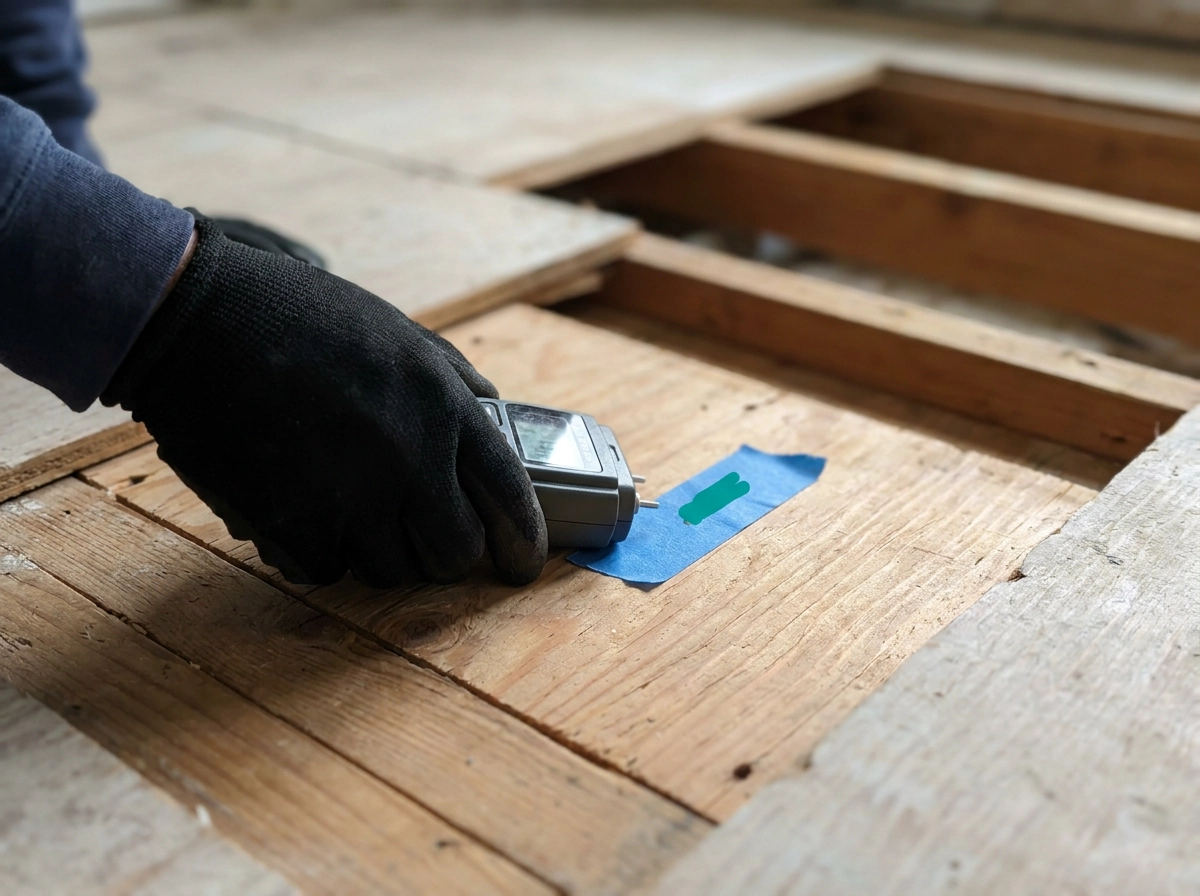
Those notes start the inspection, which establishes what's in the assembly: the panel under the finish floor, how layers are fastened, where seams fall, and how the surface reacts under load. It also pins down what the next floor needs, including carpet installation or hardwood prep, because moisture, flatness, acclimation and adhesive limits come from the manufacturer's specification. Code tables govern panel grades and span ratings, so confirm which edition Georgia and Smyrna enforce. Most importantly, it sorts findings: some belong inside the flooring assembly, others to a different professional. Naming that early keeps you from paying for work that won't hold. Final Floors handles subfloor repair and leveling, so scope starts here, not with an assumed cause.
Where the Scope Can Land Once the Inspection Is Done
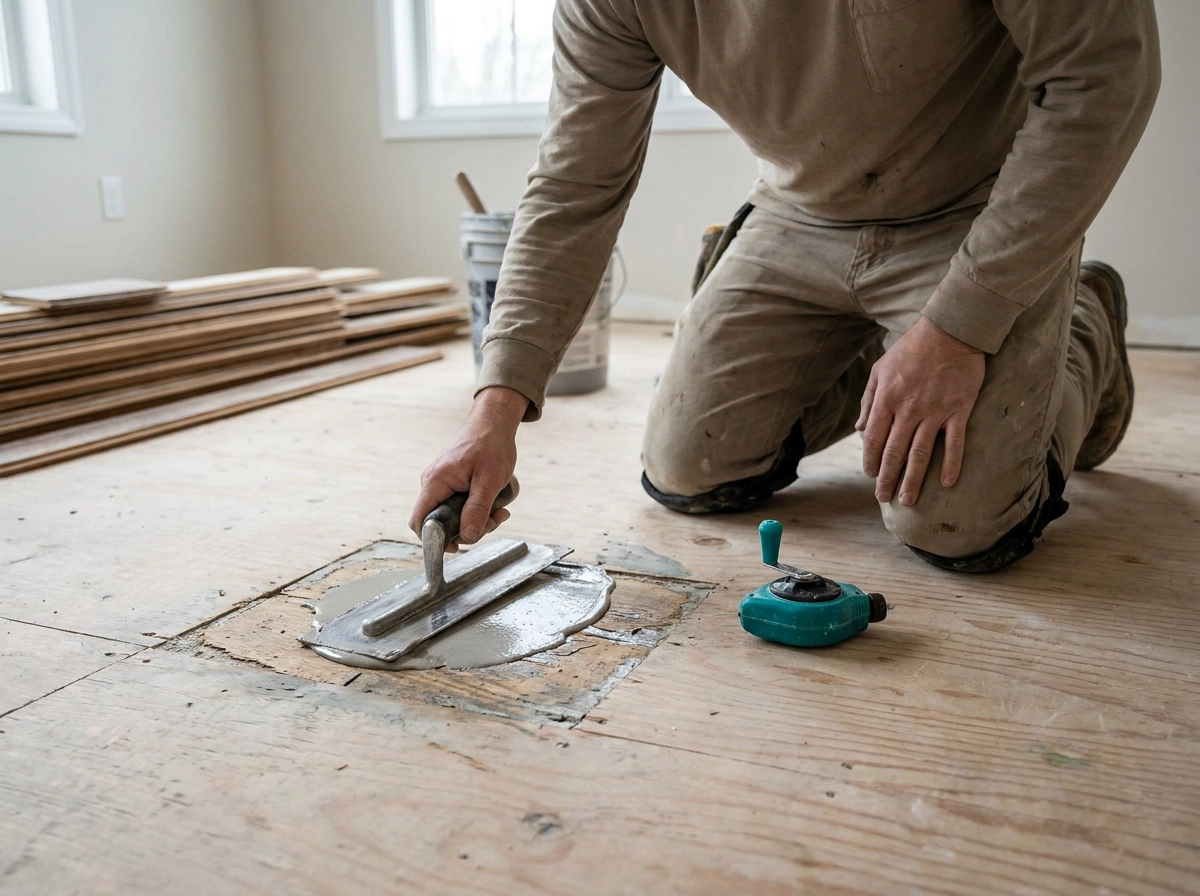
Inside the assembly: panels get re-secured, flattened or replaced in the affected area, then the finish floor reinstalled over a surface meeting the product's requirements. Subfloor repair and leveling is in scope for Final Floors.
Assembly checks out: if the surface has worn through rather than failed, the question becomes refinishing or screen-and-recoat. See what can change a refinishing scope.
Floor comes out: replacement follows your material, hardwood, LVP or carpet, with the same subfloor checks first.
Outside the floor: water, plumbing, structural movement or a moisture source belongs to another professional first. Final Floors returns for flooring putback after qualified mitigation.
Scope follows the inspection, not a search phrase, whether you typed repair subfloor or wood floor repair near me.
Where the Floor Ends and Another Trade Begins
Final Floors handles subfloor repair and leveling, flooring installation and replacement, hardwood refinishing and screen-and-recoat, staircase repair and renovation, commercial flooring, and flooring putback after mitigation.
Water extraction, drying, mold remediation and fire restoration are out of scope, and so is ceramic tile installation.
That boundary protects you. A contractor who stretches into another trade's work invites warranty confusion, rework, and paying twice for the same area. With water damage, qualified mitigation handles extraction, drying and clearance first; putback follows. What can change a post-mitigation flooring putback scope often begins there. Condos, rentals and offices follow the same rule: scope written for the space, trade boundaries named in writing before work starts.
Why a Guess-First Estimate Usually Goes Wrong
Cost tracks scope. Scope turns on five questions: how much floor is affected, whether the subfloor is sound, whether the finish floor can be saved, your material and finish choice, and the access, furniture moving and staircase renovation work involved.
Price before inspection and all five are guesses. Wrong ones cut both ways: unneeded work, or a mid-job change order.
A written scope lists inclusions and exclusions, not just a total; knowing what is left out, from furniture to moisture, prevents surprises.
We do not publish prices, deliberately; a real number comes from a project-specific estimate.
The same holds for wood, engineered hardwood, luxury vinyl plank or carpet: symptoms describe the surface, inspection describes what holds it up.
What to Have Ready When You Request a Subfloor Estimate
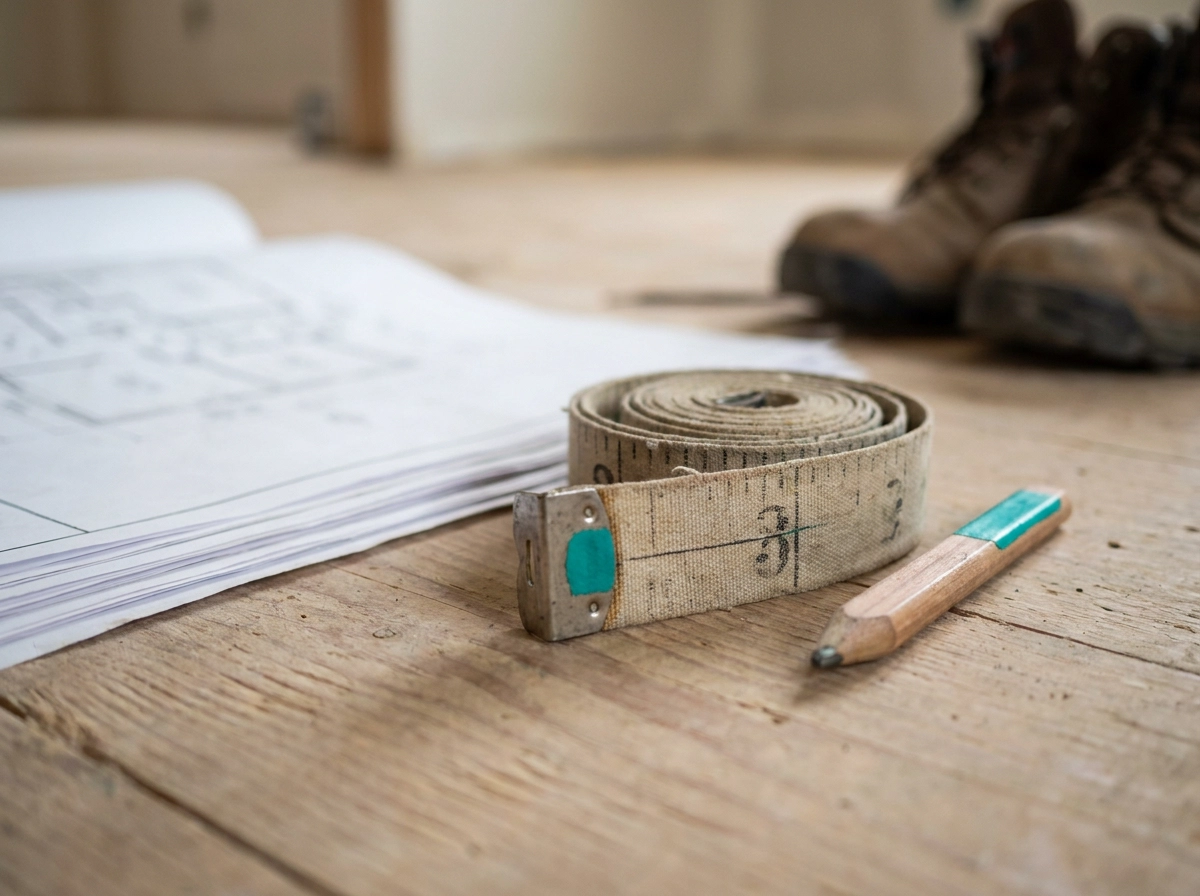
A few details make that estimate start from your actual floor.
Location: city, area, and the neighborhood if it helps locate the unit, such as Smyrna, Vinings, Marietta or East Cobb.
Size: approximate square footage, which rooms, and whether the symptom is one spot or a span.
Existing floor: the top layer, roughly how long it has been down, and when it was last refinished.
Photos: one wide room shot and a close-up of the spot that moves, squeaks or dips, in good light.
History: when it started, whether season or weather changes it, and any past leak, water event or mitigation there.
Not sure what matters? The Decision-Ready Flooring Resource: Metro Atlanta Flooring Directory helps.
Subfloor Repair Questions Smyrna Homeowners Ask
Now that your notes and photos are ready, here are the questions Smyrna homeowners ask most before choosing who to call. Can a squeak be repaired without tearing up the floor? Often, yes, but only an inspection of the assembly confirms it. Does a soft spot mean rot? Not necessarily; softness alone proves nothing about moisture. Is repair the same as leveling? No; repair corrects a condition, leveling corrects flatness. Who should you call? Start with a flooring contractor who handles subfloor repair and leveling, then let the findings set the scope. Our core Metro Atlanta flooring services cover that step, and the next sections answer each question in full.
Is a Squeak Always a Subfloor Problem?
No. A squeak is movement you can hear, but that movement could sit between the finish floor and the layer below, at a panel joint, at a loose fastener, or deeper in the framing. Because panels carry sound, the noise often reaches your ear from a spot away from the actual cause.
That is why a squeak tells you roughly where to look, not what to fix. Inspection confirms what is in the assembly and how it moves, which turns a noise into a scope. Some squeaks get resolved within the flooring assembly, and others turn out to belong to something else.
Does a Soft Spot Mean the Subfloor Is Rotten?
A squeak tells you where to look. A soft spot does the same, and it raises a bigger question: is the subfloor rotten?
Softness alone does not confirm rot or an active leak. It means the surface is not carrying weight the way the surrounding floor does. That could be a weakened panel, a gap under the finish floor, or deterioration tied to moisture. Those are different situations.
If moisture is suspected, finding the source belongs to another professional. Final Floors handles subfloor repair and leveling, not extraction, drying, or mold remediation.
An inspection of the assembly and the conditions around it, followed by a written flooring scope, is what moves this forward.
Can a Subfloor Be Repaired Without Replacing the Whole Floor?
Often, yes. Many subfloor problems are local, so the affected area gets addressed rather than the whole floor, and the finish floor above it may be reinstalled or refinished once the surface meets the product's requirements.
Two conditions decide it. First, is the subfloor under that area sound enough to meet the flooring product's requirements? Second, can the existing finish floor be salvaged there?
If the answer is no on either count, replacing the affected rooms is the honest option. Either way, the written scope and its inclusions and exclusions tell you which path applies.
Is Subfloor Repair the Same as Subfloor Leveling?
Related, but not the same thing. Repair fixes a condition in the assembly that needs correcting or replacing, like a panel that has moved or a layer that has come loose. Leveling is about flatness: the plane your next floor sits on, so the finished floor can meet the requirements of the product being installed.
One addresses what is wrong; the other addresses how flat the result is. A single project often needs both. Final Floors handles subfloor repair and leveling together, and the inspection decides how much of each is involved before anything is priced.
Who Should You Call If You Searched Floor Repair Near Me?
Once the inspection says repair, leveling, or both, the next question is who to call.
When the symptom points to the flooring assembly, call a flooring contractor who handles subfloor repair and leveling. Final Floors is a family-owned Metro Atlanta contractor in Roswell, serving Smyrna and nearby areas since 2016.
An active leak, water intrusion, a failed moisture source, or structural movement belongs to a different professional first. Final Floors returns for flooring putback after qualified mitigation.
Either search, floor repair near me or wood floor repair near me, leads to one first step: inspect, then get a written scope. Call 770-910-9719, text 770-870-9876, or request a free project-specific estimate online.
Your Next Step: Photos, Scope, Then Work
Before you call, jot down four things: your city and area, the approximate square footage and rooms involved, the existing floor type, and photos of the spot that moves, squeaks or dips.
Then request a free project-specific estimate so the scope is written from the floor in front of us, not a description over the phone, with inclusions and exclusions spelled out. Want material and room help first? Use the project match path.
Call 770-910-9719, text 770-870-9876, or request a free estimate.
Takeaway: a symptom is a starting point, not a diagnosis. Inspect first, scope second, repair third, and let the evidence decide which professional handles which part.
Author: Final Floors, LLC