Sequencing a Hardwood Refinish in an Occupied Roswell Home
By Final Floors LLC · Published
How an occupied hardwood refinish gets sequenced in Roswell: room order, furniture zones, pet plans and the agreed walk-on moment in writing.
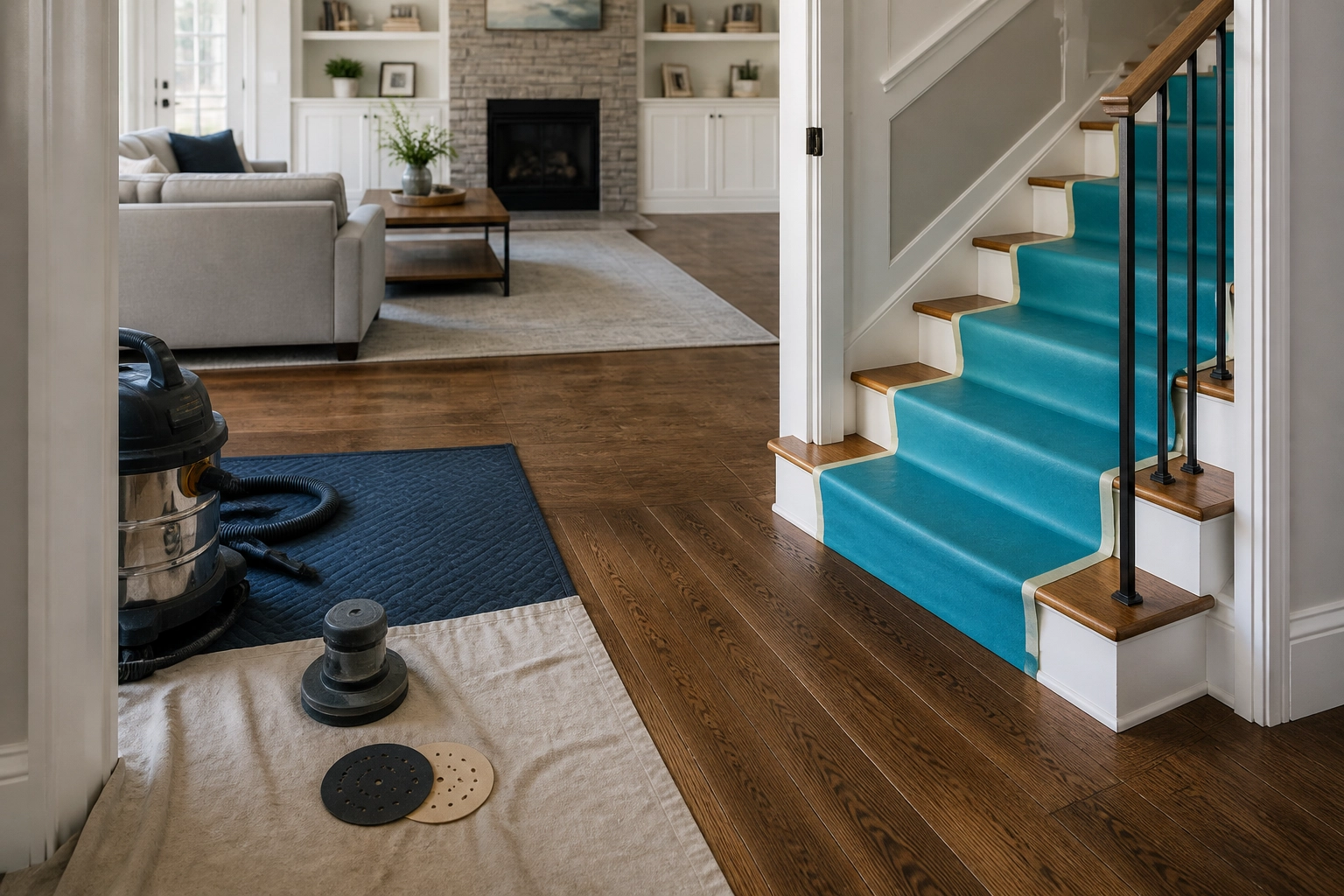
If you are searching for floor refinishing near me while planning to stay in your Roswell home, the biggest risk is not the drum sander. It is the logistics. An occupied-home refinish is scheduled, not improvised. Room order, temporary furniture zones, protected finished areas, and the exact moment your family can walk on each floor belong in the written scope before work begins. Homes that stay occupied usually fail on logistics, not on sanding quality.
At Final Floors, LLC, we treat hardwood refinishing as its own scope, separate from installation, and we plan it around how you actually live. In this guide, you will learn why occupied refinishes fail on logistics, what to decide before the first drum starts, which room goes first, how to build temporary furniture zones, how to protect adjacent finished areas, and how to manage pets, kids and occupants during the work. We will also cover lead-safe rules worth checking in pre-1978 homes, the agreed walk-on moment, what belongs in the written scope, and the questions homeowners ask before booking. Then you can lock the sequence before the drum starts.
Why Occupied Refinishes Fail on Logistics, Not Sanding
Here is Final Floors' own view, not a study finding: in our experience, occupied-home refinishes that go wrong usually fail on scheduling, furniture handling and walk-on timing, not sanding quality. Sanding and coating are the crew's controlled variables. Logistics depend on your decisions before the first drum starts: where you sleep, where the couch lives for two weeks, who takes the dog. Prevent these misses: furniture left in the next room, no agreed walk-on date per floor, pets or kids on wet finish, finished rooms exposed to grit, and a verbal scope nobody wrote down. Applies to Roswell, Alpharetta, Johns Creek, Sandy Springs and the inner Metro Atlanta ring, in condos, townhomes and houses. In short: a documented sequence, not an improvised one. See Hardwood Floor Refinishing in Atlanta. Use this framework with any contractor.

What to Decide Before the First Drum Starts
Get to know the team at About Final Floors LLC. Lock these decisions in writing before the first drum starts.
List every room, even ones people forget: closets, pantry, laundry, hallway runs, stair treads, landings. Finish a closet later and that bedroom gets disturbed twice.
Choose full sand-and-refinish or screen-and-recoat per room. Dust, disruption and return-to-use timing differ, so mixing both in one phase complicates the schedule.
Name the finish system. Final Floors works with Bona, DuraSeal and Rubio Monocoat. Manufacturer documentation for your product, not a rule of thumb, governs recoat, cure and walk-on timing.
Settle furniture before the estimate is final: what stays, what moves to a garage, basement, spare room or storage, and who moves it in and back.
Check your build year. A pre-1978 Roswell home triggers the lead-safe conversation later and changes the paperwork and practices in your scope.
Write the daily access plan: which bathroom stays usable, how the kitchen is reached, the night path, and sleeping arrangements if bedrooms are sequenced.
Make subfloor and stair work separate scope lines. Final Floors handles subfloor repair and leveling and staircase repair and renovation, and each needs its own time.
Room Sequencing: Which Floor Goes First
Sequence by dependency, not preference. One rule drives it: the last room finished is the last room you get back, so schedule the room you need soonest early, not last. An unused guest room or formal dining room beats the bedroom you sleep in.
Plan the travel path before you settle room order. In hallways, stair landings and open-plan first floors, the route is often the real sequencing problem: a finished hallway leading to an unfinished bedroom will get walked on and marked.
Decide whether the main floor runs as one continuous phase or splits. One phase shortens total disruption but means vacating that zone; splitting stretches the calendar and keeps more of the home liveable. Handle stairs and landings as their own block, since stair traffic cannot be rerouted by closing a door.
Room order is judgment, not a universal rule, so agree it in the written scope. Once the order is set, where does everything go?
Building Temporary Furniture Zones
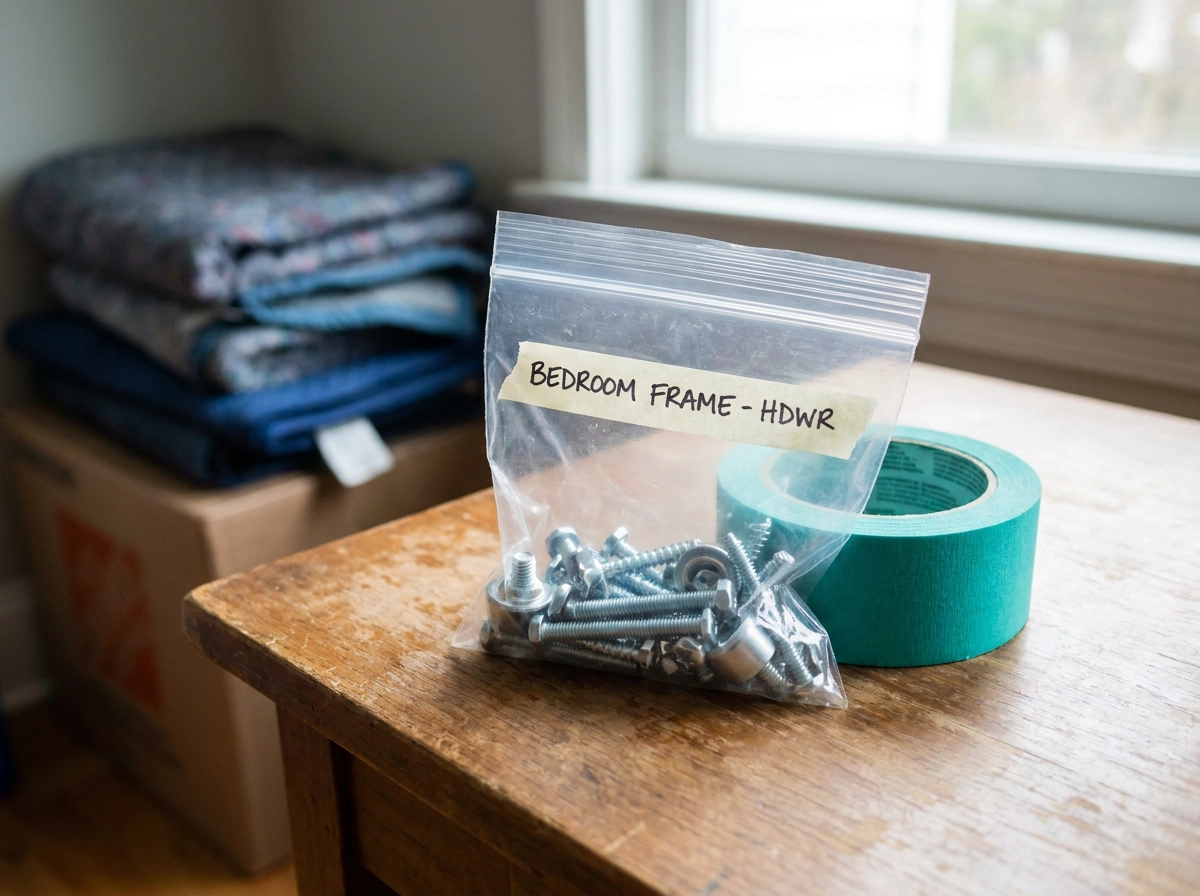
Walk the house and sort every large item into three zones: stays put in an untouched room, moves out to a garage, basement, spare room or storage unit, or leaves the house for donation or disposal. Photograph closet and shelf contents first, label bed and cabinet hardware bags, and keep feet, glides and felt pads with their furniture, then check how to protect hardwood floors from furniture before anything goes back.
Never stack furniture on a floor scheduled for sanding or coating, or stage the next room's contents on a finished floor; load distribution and sliding ruin fresh finish. Pianos, safes, sleeper sofas and big dressers usually need professional movers, a separate arrangement from the flooring scope; decide who owns it in writing.
Garages suit metal and plastic short-term, but wood, leather and veneer fare better in a conditioned room to protect them from humidity swings. Plan the return path before the last room finishes: where each piece lands and how it gets carried in, since dragging a dresser in its walk-on window creates a repair. Set a date to empty the zone.
Protecting Adjacent Finished Areas
Furniture is zoned. Now keep the work zone from bleeding into living space. Contain it at the doorway: plastic sheeting, a zippered barrier and sealed HVAC returns belong in the scope, not in hope. Already-finished floors need runner mats at the transition, a shoe-removal rule and a vacuum station at the barrier; rosin paper won't stop grit tracked out of a room still being sanded. Clean at every phase boundary, debris removal, vacuuming and tack wiping, so hallway grit isn't ground into a fresh coat next door. Tape and adhesive on a curing finish can leave a mark or lift the film, so confirm what can go down and for how long. A marked traffic lane near a barrier is often a later screen-and-recoat conversation, a separate scope with its own schedule. Keep entries in the plan: decide which exterior door stays active and which gets sealed. Before anything is taped up, ask what can change this hardwood refinishing scope so nothing here becomes a surprise line item.
Pets, Kids and Occupants During the Work
Containment keeps dust out of living zones, but people and pets inside them still need a plan. Keep pets out of the work zone during sanding and coating, both for their safety and to protect fresh finish from paws and nails. On sanding and coating days, send pets to boarding, a relative's house, a finished back room with a door, or rotate a crate away from the zone.
Kids need a boundary. Clear toys, floor-level storage, bunk beds and play areas from any room in the sequence before the crew arrives, not during. Move aquariums, reptile and bird enclosures, and anything sensitive to dust, vibration or temperature swings out for the duration. Set walk-on rules for everyone, including overnight bathroom trips, so no socks, shoes or paws cross early. The household will be tired by mid-job; tape a day-by-day expectation sheet to the fridge. What can change this refinishing scope comes down to these decisions.
Lead-Safe Rules Worth Checking in Pre-1978 Homes

If your Roswell home predates 1978, ask before sanding starts. EPA's lead-safe guide, citing the American Healthy Homes Survey (April 2011), reports lead paint in about half of pre-1978 homes, two in three built 1940–1960, and nine in ten built before 1940.
The same guide says renovation, repair and painting (RRP) requirements cover most work that disturbs painted surfaces, and contractors must give lead-paint information to occupants of pre-1978 homes. Whether RRP reaches sanding a finished hardwood floor isn't settled by our sources; ask your contractor and check current EPA guidance.
Ask for certification: EPA-model course material says renovator certification lasts five years, so a current certificate is fair to request.
Give cleanup verification its own scope line. The EPA guide notes that even after a typical renovation cleanup, dangerous levels of lead dust can remain; ask your contractor how debris leaves the space and what gets checked before normal use resumes.
A 2010 Wood Floor Business article reported fines from $37,500 per day, doubling for willful disregard, but that figure is dated; verify current amounts on epa.gov.
Georgia and Roswell rules aren't set here. Ask what applies, then verify on EPA's program page. If a water event came first, see Water-Damage Flooring Replacement in Atlanta: Plan Your Putback.
The Agreed Walk-On Moment and Return to Use
Two clocks get blurred, and both belong in the scope. The sock-feet walk-on date is when the finish is dry enough to touch. The return-to-use date is when heavy furniture, rugs and normal traffic come back. Different dates, both written down.
Get the numbers from the product data sheet for your exact finish system, not a general article. Bona, DuraSeal and Rubio Monocoat differ in recoat windows, cure time and return-to-use guidance.
Write walk-on per room. A phased house gets a staircase of dates; the family needs a calendar, not one vague promise.
Rugs and heavy furniture return separately. Vinyl- or rubber-backed rugs, and anything heavy on small feet, need confirmation first.
Humidity and ventilation shift finish behavior in Metro Atlanta. If conditions change the plan, your contractor and the manufacturer guidance decide, not a guess.
Name one person per side to authorize any change, in writing. That is the same discipline as what can change a post-mitigation flooring putback scope: written, not assumed.
What Belongs in the Written Scope
Put that calendar where the household can find it. The written scope names room-by-room square footage, the room sequence, full sand and refinish versus screen-and-recoat by room, the finish system, coat count, dust containment method, protection of adjacent finished areas, and the agreed walk-on date per room.
Ask for cleanup and verification language: how debris leaves and what gets checked before normal use resumes. Exclusions to spell out: piano and safe moving, furniture disassembly beyond what's stated, shoe molding and trim repair, subfloor repair and leveling, stair renovation.
Name a contact, a start window, daily working hours and change-order approval. Water-damage flooring work means putback after qualified mitigation; Final Floors does not provide extraction, drying, mold remediation or fire restoration, with drying documented before sanding.
Ask how the estimate is produced; Final Floors provides free project-specific estimates and mobile material selection, so the sequence conversation happens in your house, with your floor and furniture in view. Keep the scope findable; on day nine, it keeps the schedule from drifting.
Questions Homeowners Ask Before Booking
The scope covers most of it. A few last questions:
Can we live in the house during the refinish? Yes, with planning. It works when room order, furniture zones, containment and walk-on dates are in writing first.
Which room goes first? See Room Sequencing above: sequence by dependency and household need.
Where does everything go? Three buckets: an untouched room, storage or a spare room, or out of the house. Pianos and safes need a plan.
How soon can we walk on it, and when does furniture come back? Both dates come from the product data sheet for your finish system, as covered in The Agreed Walk-On Moment above.
What about lead paint in an older Roswell home? Ask if yours predates 1978. The EPA guide requires lead-paint information for occupants; whether RRP reaches hardwood sanding needs verification.
Searching floor refinishing near me? Ask for the room-by-room sequence, walk-on dates, finish system, containment and cleanup verification, not just a square-foot price.
Is screen-and-recoat a better fit? Depends how worn the finish is. Surface wear is a lighter disruption; exposed wood means a full refinish.
Next Step: Lock the Sequence Before the Drum Starts
Lock the sequence before the drum starts. Follow the room-order and logistics framework covered above, and keep the work documented from day one.
Two details depend on your home: whether lead-safe requirements apply based on build year, and return-to-use timing for the exact finish quoted.
Then ask for a written scope naming sequence, inclusions, exclusions and dates. Final Floors serves Roswell, Alpharetta, Johns Creek, Sandy Springs, Marietta, East Cobb, Smyrna, Vinings, Duluth, Peachtree Corners and Metro Atlanta, with free project-specific estimates and mobile material selection.
Send your city, rooms, square footage, floor condition and photos of worn lanes, cupped boards or prior water events. Call 770-910-9719, text 770-870-9876, or request a free estimate. Review the hardwood refinishing service page and the project match tool for how the schedule gets built. Written by Final Floors, LLC, a family-owned Metro Atlanta contractor based in Roswell since 2016.
Conclusion
Get the sequence right and the logistics follow. Lock the room order, the furniture plan, the containment strategy and the walk-on dates in writing before the first drum starts, and your home can stay livable while the floors come back to life.