How to Choose a Hardwood Finish System for a Refinish
By Final Floors LLC · Published
Compare water-based, oil-modified and hard-wax oil wood floor finishes by dry time, sheen, color and upkeep before booking a Metro Atlanta refinish.
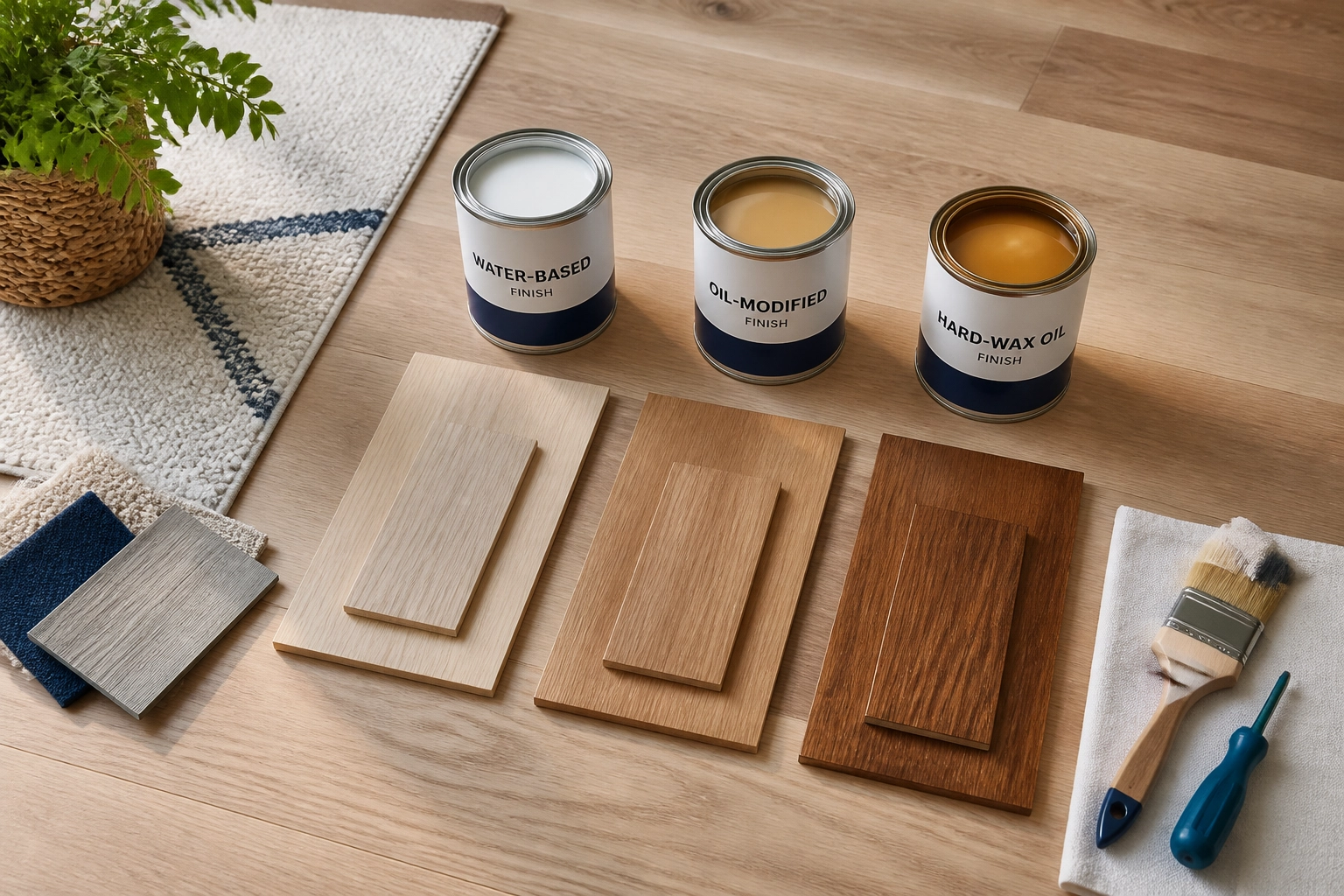
Choosing a hardwood finish feels like a color decision until you're the one tiptoeing around a curing floor. Suddenly the real questions are practical: How many nights is the furniture in the garage? Can the dog come back inside? Will the sheen look the same in the hallway as it did on the sample square?
If you're comparing hardwood floor refinishing services around Metro Atlanta, the finish family shapes your week more than the color chart does. This post walks through that trade-off in plain language, since most of us are beginners at this.
You'll read why finish choice is really a household logistics decision, which finish families a refinishing company applies, and a side-by-side of water-based, oil-modified and hard-wax oil. Then we'll get into living with each one: dry time and return-to-use windows, sheen and color on the species already on your floor, touch-up and recoat patterns, and why the written estimate must name the finish system. We'll also cover screen-and-recoat versus full refinishing, our scope boundaries, and FAQs.
Final Floors, LLC puts the finish system in writing so there's no surprise about sheen or move-out timing. Call 770-910-9719, text 770-870-9876, or request a free estimate.
Why a Hardwood Finish Choice Is Really a Household Logistics Decision
A finish choice starts as logistics, not color chips. How many nights will your household be displaced, when can furniture and rugs move back, and what will cleaning look like for the next decade?
Three questions drive the pick: how fast the floor must return to service, what sheen and color the species already installed will support, and who maintains it afterward. Metro Atlanta schedules often decide it. A one-level home in Roswell or Alpharetta cannot spare extra curing days on a guess, so ask what can change this hardwood floor refinishing scope before you commit.
Every written scope should list the sanding sequence, stain or no stain, the named finish system, coat count, and protection and cleanup. Dry time, recoat window, and return-to-use are product-specific numbers from the manufacturer's current technical data sheet. Any hardwood wood floor refinishing service should quote them for the exact product it applies.
Finish Families a Hardwood Floor Refinishing Service Applies
Water-based (waterborne) finishes use water as the carrier for a film-forming resin that cures on top of the wood, and they are the common modern pick for occupied homes and tight schedules. Oil-modified finishes are alkyd or oil-urethane films that historically delivered the warm amber tone many owners associate with older hardwoods. Hard-wax oil, like Rubio Monocoat, the system of this type Final Floors applies, penetrates and bonds into the wood fibers instead of building a surface film.
All three can be applied during hardwood floor refinishing services. The right pick comes down to your species, existing color, household schedule and maintenance appetite, not brand loyalty.
Side-by-Side: Water-Based vs Oil-Modified vs Hard-Wax Oil
Criterion | Water-based | Oil-modified | Hard-wax oil |
|---|---|---|---|
Dry, recoat, return-to-use | Product-specific; check manufacturer TDS | Product-specific; check manufacturer TDS | Depends on exact product and application method |
Sheen | Matte to gloss options vary by system | Varies by product | Often natural or matte; varies |
Color on existing wood | Holds closer to unfinished tone | Typically adds warmth | Deepens grain without a surface film |
Touch-up | Deep scratches in a film finish can reach bare wood; ask the manufacturer whether spot repair will match sheen, or plan a screen-and-recoat for a consistent result | Film finish; same pattern | Refreshed in place per manufacturer procedure |
Disruptions | Water carrier, less odor planning | Solvent odor and ventilation planning | Oil carrier; verify current safety guidance |
Sheen belongs in the estimate by name. Confirm color on a sample of your own species.
None of those cells are universal. Pull dry, recoat and return-to-use windows from the current technical data sheet for the exact product line, not from memory.
Price drivers stay the same across all three: square footage, floor condition, coat count, stain steps, stair work, and full sand versus screen-and-recoat.
Next, what each system actually feels like to live with.
Living With a Water-Based Finish
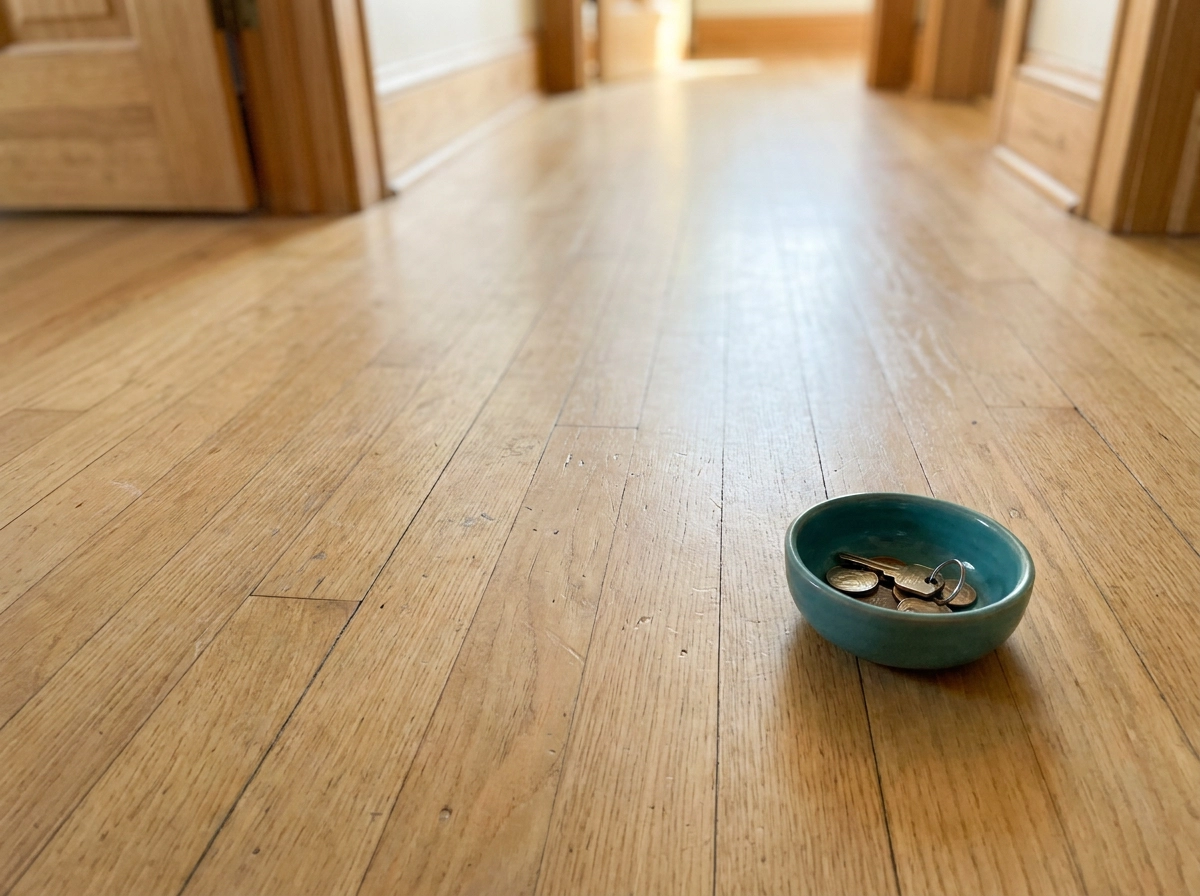
That side-by-side covers the broad strokes, but water-based earns its own look because it is the system most occupied households end up living with. Applied as a film-forming finish over freshly sanded bare wood or a properly prepared existing finish, it reads closer to raw wood than oil-modified, which owners notice most on maple, white oak and pine. Manufacturers publish recoat and return-to-use windows for each product line; check the current data sheet for the specific product line rather than relying on memory. Because it is a surface film, clean with the manufacturer's recommended cleaner and skip over-wetting, steam mops and abrasive pads.
Living With an Oil-Modified Finish
These slower-curing film finishes trade speed for depth, and they still get chosen on plenty of older Atlanta-area floors for that traditional look.
Expect warmth. Oil-modified systems typically add amber depth, and some products keep ambering with age, so read the specific product description before you commit.
Schedules run longer. Dry, recoat and return-to-use windows stretch past a water-based job, with exact numbers pulled from the current data sheet because formulations vary widely. Solvent odor makes ventilation planning real; NWFA guidance suggests fans and a raised room temperature to promote curing. Schedules may extend further, confirm the return-to-use window on the product's data sheet, which is the main reason a turnover or closing date slips. Since scope details drive those dates, review what can change this hardwood floor refinishing scope.
Maintenance: a screen-and-recoat restores the film when traffic wear shows. Deep scratches may need localized sanding and blending.
Living With a Hard-Wax Oil Finish
Rubio Monocoat, the hard-wax oil system Final Floors applies, penetrates the fiber rather than forming a film, unlike the two systems above.
Visually, it emphasizes grain and natural tone and generally leaves wood looking less coated than a film finish. Compare it against a film finish on your own sample before deciding.
Scheduling is product-specific. Dry time and return-to-use depend on the exact product and application method, so use the manufacturer's current guidance and put those numbers in your written estimate.
Maintenance is the trade-off. Periodic refresh with the manufacturer's maintenance oil or soap keeps the surface even, and for worn areas, follow the manufacturer's current maintenance instructions for refreshing worn areas.
It fits best for owners who want a natural, low-build look and will keep that simple routine on the calendar.
Next, how sheen and color read on the species already on your floor.
Sheen and Color on the Species Already on Your Floor
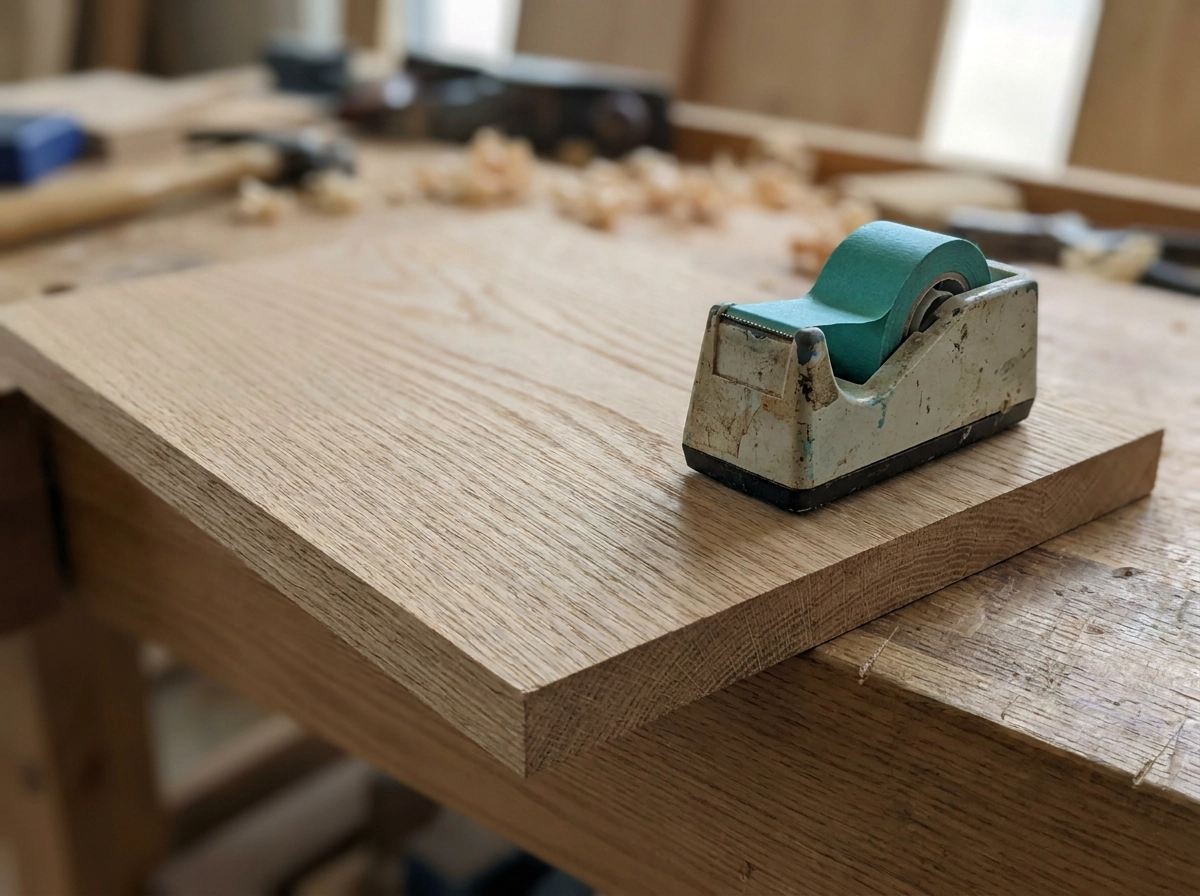
Whatever finish family you land on, sheen belongs to the finished surface, not the wood, so choose it before sanding starts. Matte and satin sheens tend to disguise everyday scuffs better than gloss, ask to see samples on your species before deciding. This is especially true in hallways and stair landings, where furniture and everyday grit usually wear a finish first. Sheen is a toleranced product property, as defined in factory-finish standards, the same principle applies to site-applied work, not a decision for the last coat.
Color depends on species. In practice, oil-modified systems add visible amber warmth, while water-based systems tend to keep lighter species such as white oak and maple paler. From field experience, pine found in older intown bungalows can be prone to blotchy stain, so request a test panel and a controlled stain method before approving a color. Existing conditions matter: a previous recoat, old wax, oil soap residue or a factory finish can affect how new stain and finish read on the same species.
The rule that saves arguments: sample on your actual species and existing stain condition, and have the estimate name the finish system, the stain and the sheen level as three separate line items.
Touch-Up, Spot Repair and Recoat Patterns by Finish Family
Before sanding starts, ask three questions: how do I clean this, how do I fix a scratch, and how often will it need a recoat?
Deep scratches in a film finish can reach bare wood; ask the manufacturer whether spot repair will match sheen, or plan a screen-and-recoat of the whole room for a consistent result.
Hard-wax oil behaves differently. It is refreshed rather than built up, so scratches are usually treated with a small amount of oil or wax worked in, following the manufacturer's instructions.
Recoat timing follows traffic, pets, tracked grit and cleaning habits, not a calendar. Ask for the manufacturer's recoat criteria instead of a promised timeframe.
Get the exact maintenance product in writing. The wrong cleaner can dull a film finish; a cleaner made specifically for the finish on your floor is the safe call, per NWFA maintenance guidance. Final Floors can screen-and-recoat sound existing floors without a full sand when the wood allows it.
Why the Written Estimate Must Name the Finish System
Once you know how you'll maintain the finish, put the same detail in the written estimate. As the side-by-side table shows, the finish family, product line, sheen and coat count each drive different schedules and maintenance patterns, all of them belong in writing.
Sheen surprise is the most common finish complaint. A matte or satin quote delivered in a glossier sheen is obvious on day one and expensive to correct. Move-out surprise is similar: if the return-to-use window runs longer than the household assumed, a rental turnover, closing date, or furniture delivery slips with it.
Bids are not comparable unless the systems and coat counts match. Compare line by line, not two totals describing different work. Ask for the dry and return-to-use window from the technical data sheet, the number of coats, the stain steps, and who handles protection and cleanup afterward. If the job follows a water loss, our guide to water-damage flooring replacement in Atlanta explains the putback sequence.
Scope Boundaries: Refinishing, Screen-and-Recoat and What We Do Not Do
If the estimate conversation raised the question of who actually does what, here is our scope. Final Floors, LLC is a family-owned Metro Atlanta flooring contractor based in Roswell, serving Atlanta, Buckhead, Midtown, Roswell, Alpharetta, Johns Creek, Sandy Springs, Marietta, East Cobb, Smyrna, Vinings, Duluth, Peachtree Corners and nearby communities.
Our matching work includes hardwood refinishing, screen-and-recoat, subfloor repair and leveling, stair repair and renovation, and flooring replacement after water mitigation. We are not a mitigation company: we do not provide water extraction, drying, mold remediation or fire restoration. A wet-floor event goes to a qualified mitigation provider first, and our work starts at the flooring putback.
Hardwood installation stays separate from refinishing. If part of the floor is being replaced, ask for both scopes in one written estimate.
Finally, moisture, flatness, acclimation, adhesive and return-to-use requirements are verified for your specific product and project, never assumed from a general table.
FAQ: Finish Systems, Timelines and Estimate Details
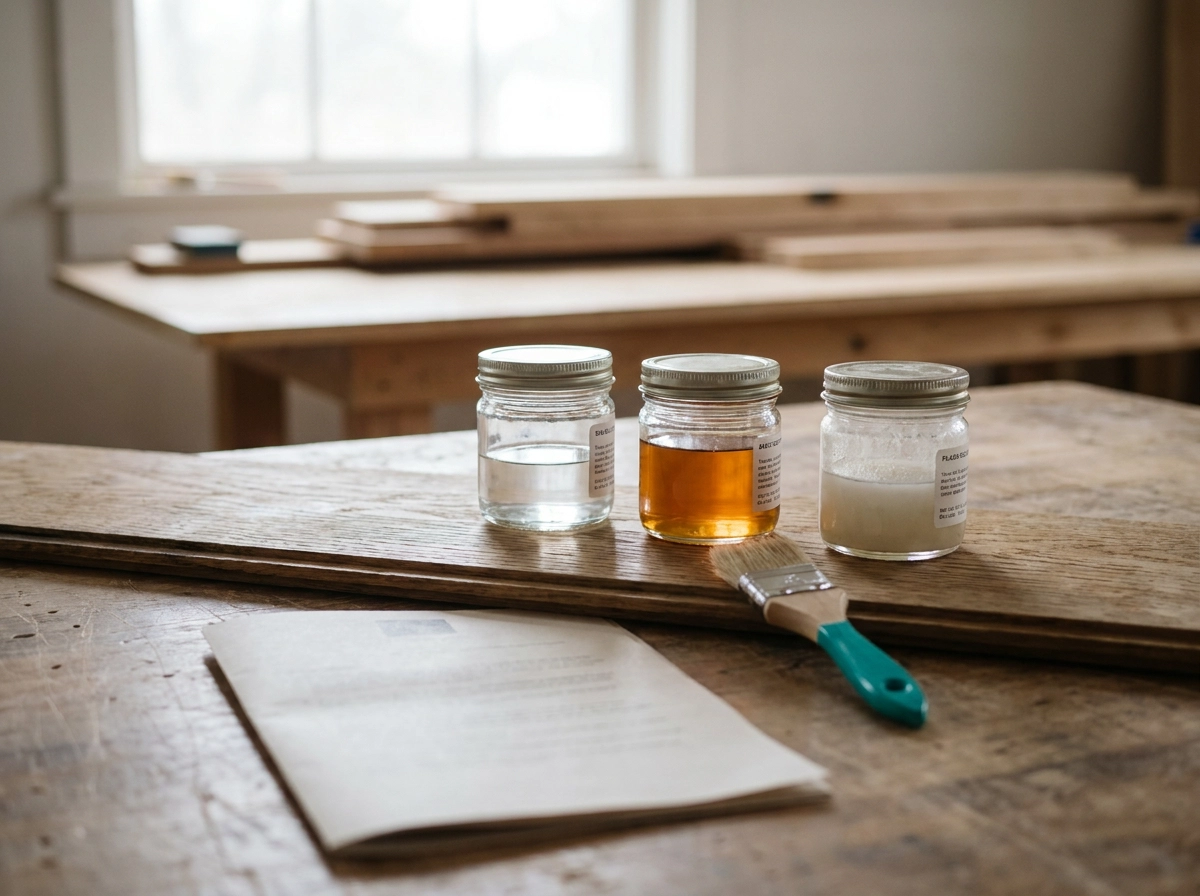
Water-based, oil-modified or hard-wax oil? No universal winner. Choose by return-to-use window, the sheen and color your species supports, and your maintenance appetite.
How long before furniture and rugs go back? Depends on the product line. The manufacturer's current technical data sheet gives the window, and it should appear in your written estimate.
Will the finish smell, and do we need to move out? Odor follows the carrier and formulation, so check the product's safety information. Most households stay home, but ventilation, pets and dust protection still need a plan.
Does this work for one room, a rental turnover or a condo? Often yes, but sheen and color matching between spaces needs a sample review, and buildings or HOAs may set work-hour and elevator rules.
Is refinishing the same as replacing hardwood? No. Refinishing reworks the wood already on the floor; new installation is a separate scope with its own cost structure.
If mitigation is involved, what can change a post-mitigation flooring putback scope covers the variables.
Next Step: Get a Free Project-Specific Estimate
With the basics settled, choose the finish by schedule first and look second. The system sets your return-to-use window along with the sheen and color you will live with.
Get the finish family, product line, sheen, coat count, and dry or return-to-use window named in the written estimate before anyone sands. Then ask how you will clean and refresh the floor, because that routine decides how it looks five years from now.
Call 770-910-9719 or text 770-870-9876 with your city, the area being refinished, the existing floor, and a few photos. Or request a free project-specific estimate at finalfloors.com. Mobile material selection is available. Start with our hardwood floor refinishing services page and the flooring project match tool.
Conclusion
Nail the finish details down in writing before sanding starts. The system drives your return-to-use window, your cleaning routine and how future touch-ups work, so the product line, sheen, coat count and return-to-use window all belong in the estimate. A clear finish plan today means a floor you enjoy for years.